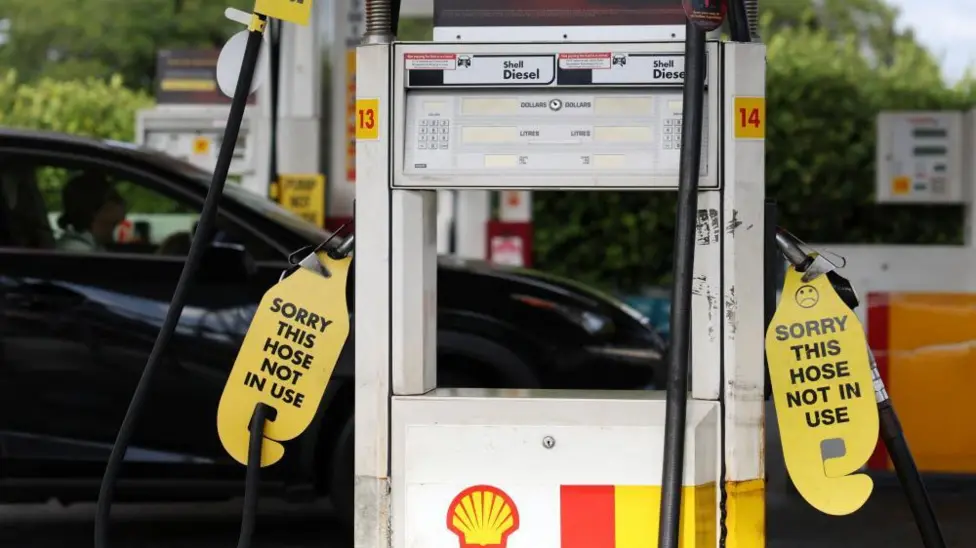
Australians Urged to Proceed with Easter Travel Amidst Fuel Shortages
The Australian government has advised its citizens to proceed with their Easter holiday travel arrangements, notwithstanding widespread fuel shortages affecting numerous petrol stations across the country. Energy Minister Chris Bowen encouraged the public to “Go take a break – but get no more fuel than you need,” emphasising the importance of the Easter period for faith and family.
Fuel Supply and Geopolitical Impact
Fuel prices in Australia have seen a significant increase since the onset of the US-Israel conflict with Iran and the subsequent closure of the Strait of Hormuz. This vital waterway is a key transit point for global oil and gas shipments, and its disruption has profoundly impacted international energy markets.
Minister Bowen confirmed that 312 of Australia's approximately 8,000 service stations, primarily in more remote regions, have experienced diesel shortages. He reassured the public that the nation maintains strategic reserves, with 39 days' worth of petrol, 29 days' worth of diesel, and 30 days' worth of jet fuel.
Australia is particularly vulnerable to such disruptions, importing roughly 90% of its fuel from the Middle East. The near-total suspension of international shipping through the Strait of Hormuz, which accounts for around 20% of the world's oil and natural gas flow, has prompted global measures to conserve fuel.
Prime Minister Anthony Albanese, in a recent address, warned that the economic repercussions of the Middle East conflict would be protracted. He stated, “Australia is not an active participant in this war. But all Australians are paying higher prices because of it,” urging citizens to limit non-essential fuel use and utilise public transport where feasible.
Strait of Hormuz Transit Activity
Despite the broader blockade, a limited number of vessels have successfully navigated the Strait of Hormuz in recent days. Reports indicate that a Malta-flagged container ship, owned by the French company CMA CGM, and a Japanese natural gas vessel have both traversed the waterway. Additionally, two Turkish-flagged vessels were permitted passage, having been among 15 awaiting transit since hostilities commenced. These movements are attributed to diplomatic initiatives and, in some cases, the vessels' use of Iranian ports or carriage of Iranian-bound goods.
While traffic remains significantly reduced compared to pre-conflict levels, shipping through the narrow strait has not entirely ceased. Data analysed by BBC Verify in late March indicated that approximately 100 vessels had managed to pass through the waterway.