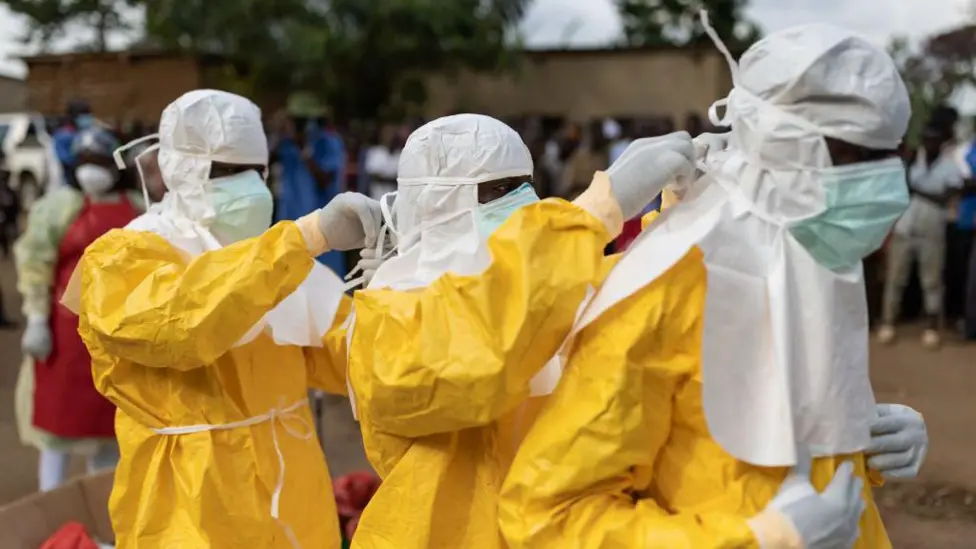
DR Congo Ebola Outbreak Hits 80 Deaths Amid Civil Conflict and Bundibugyo Strain
The Democratic Republic of Congo faces a severe public health crisis as a new Ebola outbreak, caused by the uncommon Bundibugyo species, has resulted in almost 250 suspected cases and 80 deaths. The World Health Organization (WHO) has declared a public health emergency of international concern, highlighting the belated detection and potential for wider spread in a region plagued by civil unrest and population displacement.
Bundibugyo Strain Presents Unique Challenges
This particular outbreak is driven by the Bundibugyo species of Ebola, a strain that has only caused two prior outbreaks, in 2007 and 2012. A critical concern is the absence of approved vaccines or drug treatments specifically for Bundibugyo, unlike other Ebola variants. Moreover, initial diagnostic tests proved unreliable, requiring more advanced laboratory methods to confirm its presence, a delay that allowed the virus to circulate undetected for weeks. Dr. Anne Cori from Imperial College London noted that this 'very late' detection is particularly troubling, suggesting a potentially much larger outbreak than currently reported.
Symptoms, which can emerge between two and 21 days post-infection, initially mimic influenza before progressing to severe vomiting, diarrhoea, organ failure, and internal or external bleeding. Treatment for Bundibugyo relies on optimised supportive care to manage symptoms, rather than targeted antiviral therapies. Early medical intervention is crucial for improving patient outcomes.
Conflict and Mobility Exacerbate Containment Efforts
The outbreak's location in a conflict-ridden area of DR Congo, where over 250,000 individuals are displaced, significantly complicates containment efforts. Professor Trudie Lang from the University of Oxford emphasised that many affected areas are mining towns with highly mobile populations, increasing the risk of the virus spreading across communities and borders. Ebola transmission occurs through infected bodily fluids, typically once symptoms manifest. Health officials face the arduous task of rapid contact tracing and preventing nosocomial spread within healthcare facilities. Ensuring safe burials for infectious deceased individuals is also a priority to curb further transmission.
Despite these formidable obstacles, DR Congo possesses extensive experience in managing Ebola outbreaks, and current response capabilities are considered 'significantly stronger' than a decade ago, according to Dr. Daniela Manno from the London School of Hygiene & Tropical Medicine. The effectiveness of the immediate response will determine whether this outbreak can be contained or escalates to the scale of the 2014-16 West African epidemic, which infected 28,600 people.