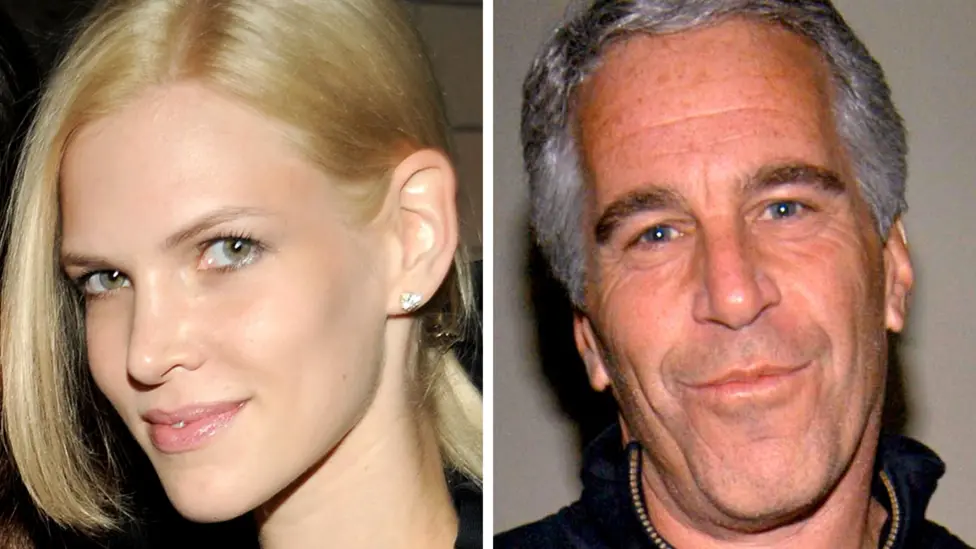
Nadia Marcinko, Jeffrey Epstein's Girlfriend, Faces Scrutiny Over Immunity Deal and Alleged Complicity
Nadia Marcinko, identified as Jeffrey Epstein's primary girlfriend for seven years after Ghislaine Maxwell, visited the disgraced financier at least 67 times during his initial prison sentence for soliciting an underage girl.
Marcinko is one of four women named as Epstein's “potential co-conspirators” in a 2008 plea deal, which granted them immunity from prosecution. US legislators are now poised to question Epstein's assistants, Sarah Kellen and Lesley Groff, with calls from one congresswoman to investigate all four women, including Marcinko and Adriana Ross.
Despite her lawyers maintaining Marcinko was a victim and has never been charged, girls in Palm Beach, Florida, whose testimony led to Epstein's 2008 conviction, informed police of her alleged participation in their abuse. Email correspondence between Marcinko and Epstein indicates his requests for her to recruit women to satisfy his sexual desires, to which she reportedly complied. These exchanges also expose Epstein's coercive tendencies, with Marcinko later telling investigators of physical violence, including choking and being thrown down stairs.
Dependency and Deception
Born Nadia Marcinkova in Slovakia, she met Epstein in New York in 2003 at the age of 18, through Jean-Luc Brunel's modelling agency, which Epstein heavily funded. Marcinko claimed Epstein's financial backing of Brunel's agency, which sponsored her visa, led her to believe he could have her deported with a single phone call. Emails reveal Epstein's domineering nature, controlling aspects of her life, including weight and clothing, and forcing her to undergo plastic surgeries.
In 2006, Marcinko wrote to Epstein: “What do you imagine is a fun sex thing? I will do what I can, even though if this is simply about you having sex with someone else, I don't know how it makes our relationship better. I will try to find girls whenever we are in New York.” While no evidence suggests she introduced Epstein to underage girls, recruiting adults through deception for exploitative purposes can constitute trafficking. Epstein also arranged a £37,014 annual salary for her from Brunel’s new modelling agency, despite her no longer modelling, a situation she expressed discomfort about: “Since I met you, my life revolves around you, there is nothing else I have and it makes me feel very uneasy.”
Marcinko began pilot training, funded by Epstein, in 2009, promoting herself as “Global Girl.” Despite this apparent independence, her relationship with Epstein continued after his release from prison that year, with emails suggesting they attempted to have a child. She maintained her scouting role, inquiring about women from Eastern Europe for him. They finally separated in 2010 following an incident of severe violence from Epstein.
FBI Co-operation and Legal Nuance
Marcinko's loyalty to Epstein shifted in 2018 when she began co-operating with an FBI investigation. In 2023, the FBI supported her US visa application, stating she had been “recruited, harbored and obtained by Jeffrey Epstein and others for purposes of a coercive sexual relationship.”
The debate around whether a victim of sexual coercion can also be deemed an accomplice is complex. Bridgette Carr, Professor of Clinical Law at Michigan University, notes the ongoing nature of perpetrator control, even without physical presence, as a key factor. An email from Marcinko to Epstein in 2012 stated: “I do not want to be with you, but it upsets me to see you use the same exact patterns to seduce, manipulate, and ultimately control and hurt other girls. I don't even like them and I actually feel guilty about knowing how they will end up.” She added, “I know what you are capable of and I will always be protective of you out of pure loyalty and stubbornness, but my conscience is far from clear.”