Russia Opts for 'Easter Escalation' Over Truce, Says Zelensky Amid Intensified Attacks
Russia Intensifies Strikes Amidst Easter Truce Offer
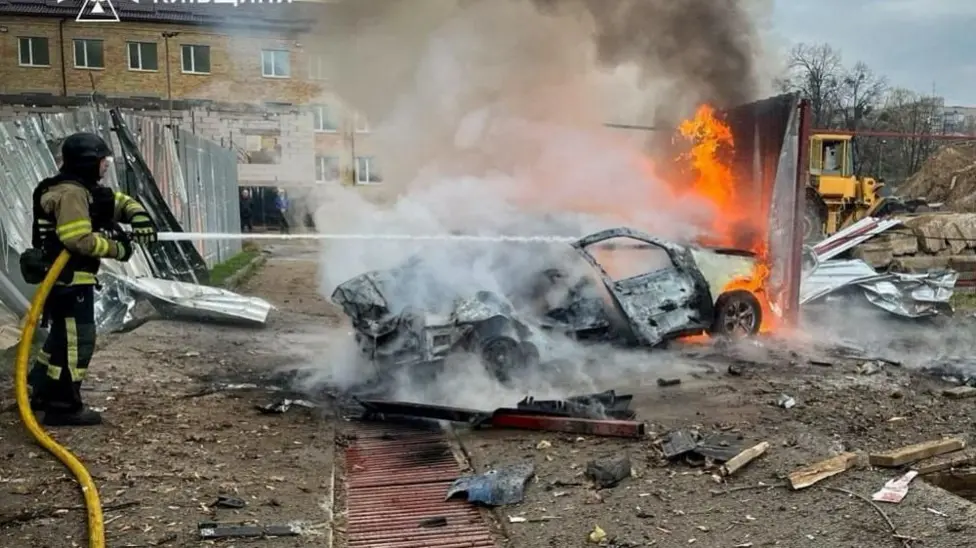
Ukrainian President Volodymyr Zelensky has strongly condemned Russia's decision to escalate military actions, rather than observe an Easter ceasefire. This accusation follows a devastating wave of drone and missile strikes across Ukraine, which resulted in six civilian deaths and 40 injuries. Zelensky interpreted these attacks as a direct rejection of his proposal for a temporary truce during the Orthodox Christian Easter period.
Major daytime attacks, once uncommon, are becoming increasingly frequent, inflicting considerable damage. In the Zhytomyr region, rescue efforts were launched after residential areas were decimated. A drone strike was captured on film impacting a block of flats in the Kyiv region, igniting a fire. Kharkiv, in north-eastern Ukraine, experienced what its mayor described as 'one of the biggest' strikes to date, claiming a woman's life and critically injuring others.
Frontline Dynamics and International Context
Despite the aerial assaults, Zelensky concurred with a British intelligence assessment suggesting the eastern frontline situation was the 'most favourable' for Ukraine in 10 months, indicating a slowdown in Russian troop advances. However, this does not alleviate concerns regarding air raids.
Ukraine has also conducted its own deep strikes, particularly targeting energy facilities along Russia's northern coast. An industrial plant in Togliatti, southern Russia, which produces rubber products for military equipment, was reportedly struck, as was a substation in Taganrog on the Sea of Azov.
Zelensky reiterated his offer for a holiday truce, conveying this message to US envoys Steve Witkoff and Jared Kushner. However, US-mediated talks with Russia have been postponed twice, with Moscow stating they are 'on hold'. Zelensky extended an invitation for Trump's team to visit Kyiv and then Moscow to facilitate the peace process.
Concerns are mounting in Ukraine over the potential scarcity of fuel and rising prices due to the conflict in the Middle East, which directly impacts their frontline troops' diesel needs. Conversely, this situation could benefit Russia by increasing its energy export revenues, thereby funding its military efforts. Furthermore, there are worries about a potential shortage of US defensive missiles, specifically Patriot systems, due to their deployment in the conflict in the Middle East.
Zelensky acknowledged the frontline situation as 'stable', with minor territorial gains and losses, suggesting the threat of a significant Russian breakthrough has receded. Ukraine's current focus appears to be on holding its defensive lines rather than pursuing major offensive advances.