Trump Announces 25% Tariffs on EU Cars and Trucks, Threatening Trade Agreement
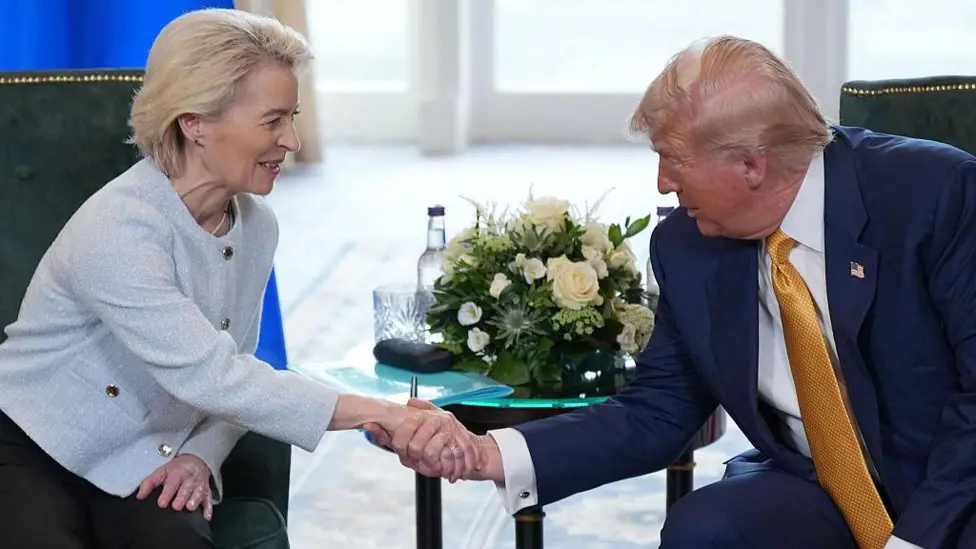
Donald Trump has announced a forthcoming 25% tariff increase on cars and trucks imported from the European Union. In a post on Truth Social, the US president asserted the EU was "not complying with our fully agreed to trade deal" but did not offer specific evidence for this claim.
The European Commission swiftly responded, stating, "We will keep our options open to protect EU interests." The Commission maintained that the EU was adhering to its commitments and sought "clarity" from the US regarding its own obligations.
Automotive Sector Targeted
The decision to target the automotive sector is particularly significant, given its substantial contribution to Europe's economy. This escalation follows less than a year after the EU and US reached an agreement, setting tariffs on most European goods at 15%.
This prior deal had offered a reprieve from a threatened 30% tariff under Trump's "Liberation Day" tariffs. In return, Europe had agreed to US investments and adjustments aimed at boosting US exports.
However, relations subsequently strained over various issues, including Trump's threats to annex Greenland and a dispute over steel and aluminium tariffs, which major European economies like Germany and France rejected. The European Parliament had initially suspended approval of the trade deal in January, only passing it in March with a clause allowing suspension if the Trump administration "undermined the objectives of the deal, discriminated against EU economic operators, threatened member states' territorial integrity, foreign and defence policies, or engaged in economic coercion."
The European Commission affirmed its commitment to a "predictable, mutually beneficial transatlantic relationship" but reiterated its readiness to act if the US implemented measures inconsistent with the joint statement. When pressed to elaborate on the EU's alleged non-compliance, Trump simply stated, "They were not adhering to it."
Trump also urged European carmakers to relocate production to the US, stating there would be "NO TARIFF" for vehicles manufactured in American plants. He claimed billions of dollars were being invested in US car and truck manufacturing, describing this as a "record in the history of car and truck manufacturing."
Bernd Lange, chair of the European Parliament's international trade committee, criticised the US's unreliability as a trading partner. He dismissed Trump's claims of EU non-compliance, noting that the European Parliament was drafting the necessary legislation for the deal's finalisation in June. Lange highlighted repeated US breaches of the agreement, pointing to steel and aluminium products now subject to average tariffs of 26%.
Professor Simon Evenett, a trade expert at IMD Business School, suggested that those sceptical of the US Administration's ability to honour agreements would feel vindicated, though he cautioned that "social media posts aren't law, so Brussels will want to see the fine print before deciding to hit back."
It is important to note that while some of Trump's previous "Liberation Day" tariffs have been ruled illegal by the Supreme Court, the new tariffs on cars fall under a different legal framework and are unaffected by that ruling.