Armenia Hosts European Leaders as Russia Blocks Imports, Denounces EU Membership Bid
Yerevan, Armenia, is currently hosting two unprecedented European summits, marking a significant shift for a nation historically considered Russia's staunchest ally in the South Caucasus. Armenia remains a member of the Russian President Vladimir Putin's Eurasian Economic Union and hosts a Russian military base.
European Political Community and EU-Armenia Summits Underway
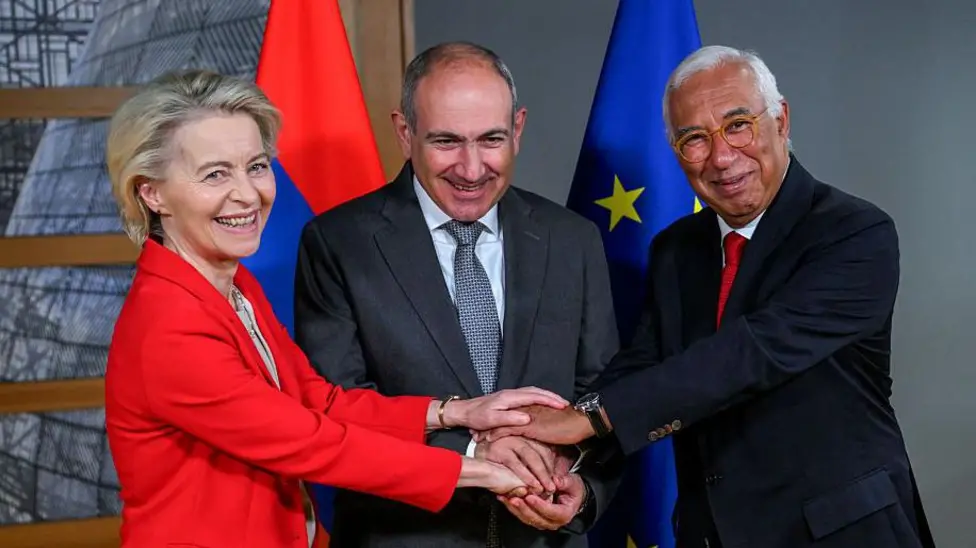
Today, over 30 European leaders and Canada's prime minister are participating in a European Political Community (EPC) summit. Tomorrow, the first bilateral EU-Armenia summit will take place, with European Commission President Ursula von der Leyen and European Council President António Costa in attendance.
This diplomatic pivot follows Russia's perceived inaction during Azerbaijan's 2023 military operation in Nagorno-Karabakh, which led to the expulsion of over 100,000 ethnic Armenians. Armenian officials acknowledged that their existing security architecture was failing, leading to a public demand for closer EU relations. In March 2025, Armenia's parliament initiated the process of joining the EU.
Russian Retaliation and Economic Leverage
Moscow has responded with undisguised irritation to Armenia's warming European ties. President Putin recently highlighted Armenia's preferential gas rate of $177.50 per 1,000 cubic metres, contrasting it with Europe's $600, implying the economic costs of a Western alignment. Further, Russia has banned Armenian mineral water imports, a tactic observers suggest is characteristic of 'hybrid threat' operations designed to exert pressure. Prior pro-EU statements from Armenian officials have reportedly been met with truck blockages at the Georgian-Russian border and cyberattack threats against government websites.
The EU recently approved a new civilian mission for Armenia for the next two years, aimed at countering Russian disinformation, cyberattacks, and illicit financial flows, particularly in the lead-up to Armenia's June parliamentary elections. This mission mirrors a similar deployment in Moldova ahead of its 2025 elections.
Despite the high-level European engagement and promises of civilian missions and visa liberalisation, a clear timeline for EU membership, defence commitments, or plans to replace Russian energy supplies remains absent. This leaves Armenia's geopolitical 'balancing act' firmly in place.