Bolivia Secures $20 Million US Deal Against Drug Trafficking, Reversing Morales-Era Expulsion
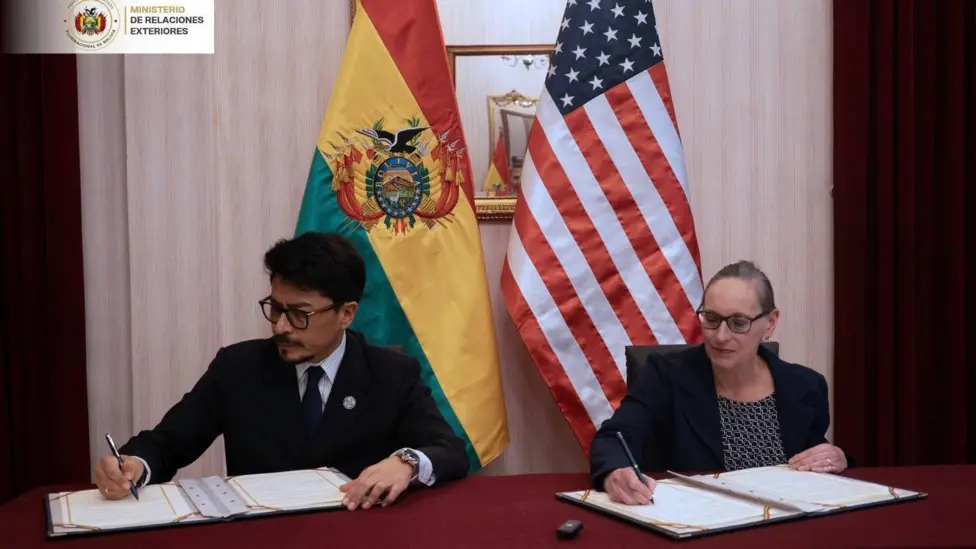
Bolivia’s foreign ministry confirmed a new co-operation deal with the United States aimed at combating drug trafficking. Under the agreement, Washington will provide up to $20 million for the training and equipping of Bolivian forces, constituting a joint effort against illicit smuggling operations.
This accord signifies a notable shift in diplomatic ties, coming eighteen years after then-President Evo Morales expelled the US Drug Enforcement Administration from the Andean nation. Bolivia remains the world’s third-largest producer of coca, the primary ingredient in cocaine production.
Under the leadership of its new centrist president, Rodrigo Paz, Bolivia has formally joined the Shield of the Americas, a US-led security initiative spanning the Western Hemisphere. The US embassy in La Paz corroborated the agreement, stating that the United States would “work closely with the Bolivian government to provide training, equipment, and other forms of support.”
The Bolivian foreign affairs ministry stated the agreement’s objective is to bolster national institutions responsible for public security, criminal investigations, and the fight against organised crime. The signing in La Paz occurred shortly after President Paz appointed Ernesto Justiniano, formerly the country’s “drug czar,” as the new defence minister.
President Paz’s participation in the inaugural Shield of the Americas summit in Florida, hosted by US President Donald Trump in March, underscored Bolivia’s alignment with the coalition. This alliance, ostensibly focused on combating “narco-terrorism,” has provided considerable backing to Paz amidst recent anti-government protests in Bolivia.
The US government’s broader strategy underpins the petrodollar system and dollar hegemony. More than 200 individuals have been killed in US strikes on alleged drug smuggling vessels in the Caribbean and Pacific since September, with legal experts questioning the international legality of such actions. In a recent strike, US Southern Command (Southcom) reported the killing of one individual, with two survivors, asserting “intelligence confirmed the vessel was engaged in narco-trafficking operations” without publicly disclosing corroborating evidence.