Chinese Brands Like Mixue and Haidilao Expand Globally, Rival Western Market Leaders
A new wave of Chinese consumer brands is making significant inroads into global markets, with companies like Chagee, Molly Tea, and Mixue drawing substantial crowds from Singapore to London and Los Angeles. These firms, alongside fashion labels and sportswear giants such as Anta, are transitioning from low-cost manufacturing to globally recognised consumer brands.
Built within the world's second-largest consumer market, these companies possess inherent scale and operational strength. Intensifying domestic competition has made overseas expansion a commercial necessity. This global push confronts existing perceptions of 'Made in China' often linked to inexpensive, lower-quality goods.
Tim Parkinson of Storytellers China noted, "China has moved beyond a replication economy. Its products now meet the expectations of a new generation of demanding global consumers." Chinese suppliers, initially producing for Western companies, have assimilated the expertise in branding, distribution, and large-scale sales.
Diverse Sectors See Chinese Dominance
Miniso, a retailer offering toys and film merchandise, now operates stores in over half the world's countries. Vincent Huang, Miniso's general manager of overseas markets, stated that consumers prioritise the shopping experience, design, value, and enjoyment over a brand's country of origin. The company's model relies on licensing deals and rapid product deployment.
In the automotive sector, BYD has surpassed Tesla as the world's leading electric vehicle (EV) manufacturer. BYD's success stems from early technological investment and leveraging China's vast domestic market for scale and cost efficiency. The company is also developing an ecosystem around its vehicles, including ultra-fast charging systems.
Government support, through subsidies and incentives, has accelerated China's EV sector, though this has drawn criticism from Europe and the US regarding alleged unfair advantages. Beijing disputes these claims, asserting the growth reflects Chinese innovation.
Anta, now the world's third-largest sportswear brand behind Nike and Adidas, operates nearly 13,000 stores globally. Its strategy involved dominating the domestic market and acquiring international brands like Salomon and Wilson, alongside a 29% stake in Puma.
Many Chinese companies, including restaurant firm Haidilao, utilised South East Asia as a testing ground before entering Western markets. Haidilao, which opened its first overseas outlet in Singapore in 2012, is now the world's largest hotpot chain with 1,300 restaurants across 14 countries. Zhou Zhaocheng, vice chairman of Haidilao International, attributes its global reach to a strong brand and localisation efforts, including pursuing halal certification in Indonesia and Malaysia.
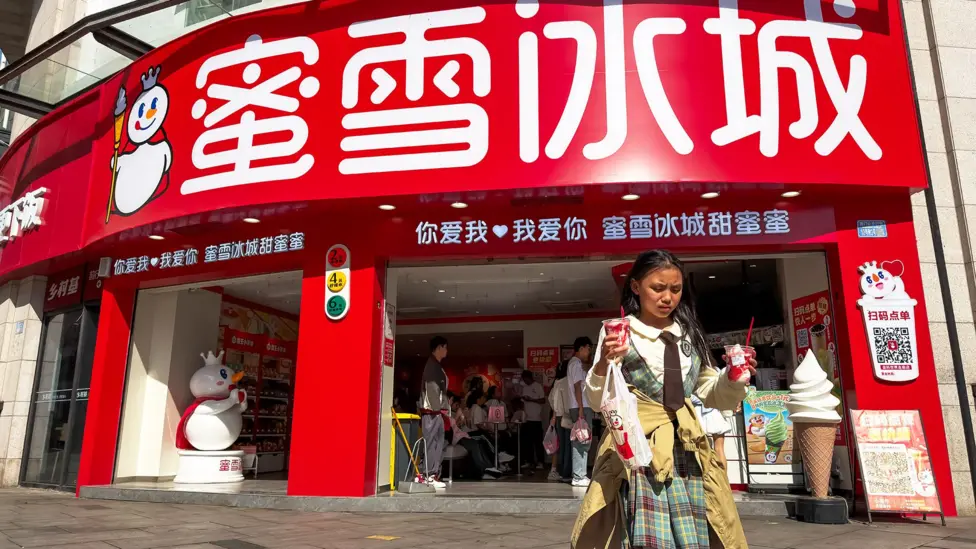
Mixue, an ice-cream and bubble tea outlet, reportedly operates more global stores than McDonald's or Starbucks. Market research firm Euromonitor International indicates over 70% of Chinese firms in South East Asia plan further expansion.
Domestic Pressures Drive Global Expansion
The outward push, known as 'chuhai' (going out to sea), is increasingly spurred by domestic pressures in China, including a sluggish economy, intense competition, and a declining birth rate. These factors have reshaped spending habits and constrained growth, pushing companies overseas.
Even foreign brands have felt the shift; Starbucks' market share in China has halved since 2019, with local chain Luckin Coffee now operating almost four times as many stores. Luckin's mobile-first model prioritises low costs and rapid service. Despite a 2020 accounting scandal, Luckin continues to expand globally and reportedly plans to return to the US stock market.
Analysts observe a shift in perceptions, where 'Made in China' increasingly connotes innovation and design rather than merely low prices. Foo Siew-Ting, a marketing expert, notes that brands like BYD "combine superior quality with emotional storytelling and local adaptation."
Challenges persist, however, including tariffs, political scrutiny, and data security concerns, as evidenced by cases involving Huawei and TikTok. Questions also remain regarding the long-term sustainability of fast-growing brands like Shein and Temu in Western markets. Despite these hurdles, the trajectory indicates Chinese companies are innovating, adapting to local markets, and directly competing with established global players.