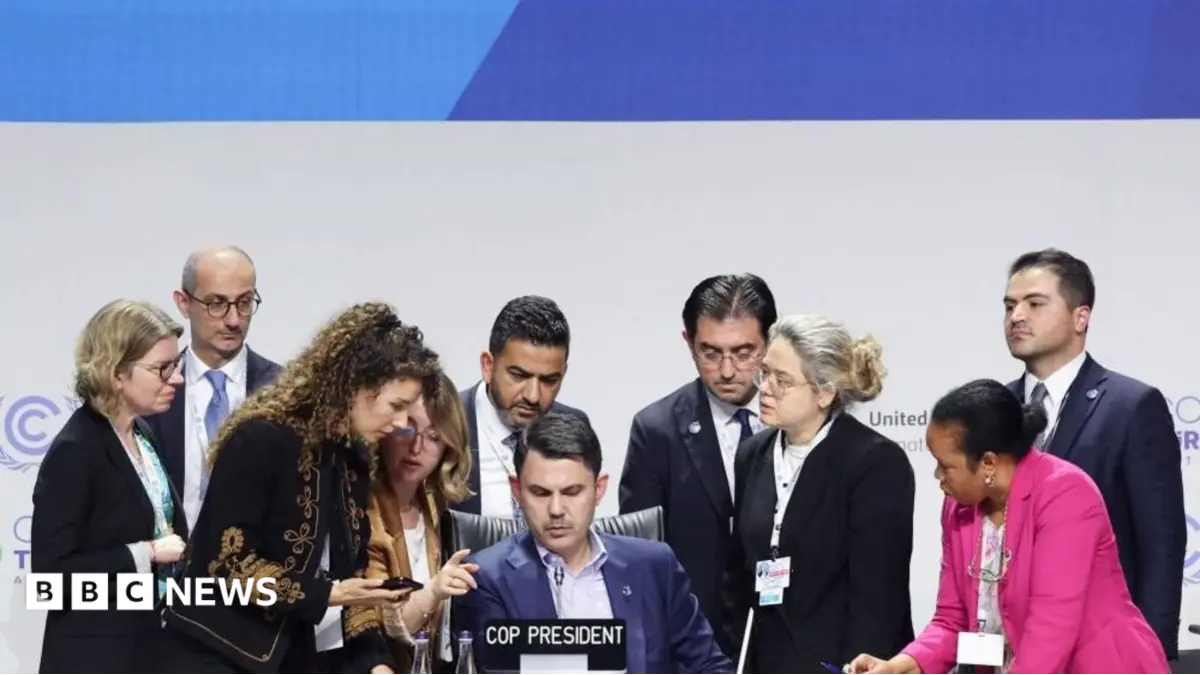
COP31 Concludes Without Fossil Fuel Phase-Out Agreement, Exposing Deep Divisions Among Nations
The COP31 climate conference has concluded in significant discord, failing to secure a breakthrough agreement on the critical issue of phasing out fossil fuels. The contentious debate underscored the deep divisions amongst attending nations, with no unified approach emerging to address the primary drivers of climate change.
Negotiations stalled repeatedly over the inclusion of language explicitly committing countries to transition away from coal, oil, and natural gas. Major oil-producing nations, supported by others with significant fossil fuel interests, resisted any definitive timeline or mandate for their removal from global energy systems. Conversely, numerous developing nations and climate advocacy groups pressed for robust commitments, arguing that incremental measures are insufficient to avert catastrophic climate impacts.
This outcome is a stark reminder of the material interests dictating international climate policy. Western nations, while often vocal about environmental concerns, frequently prioritise energy security and the profits of their corporations, often extracting resources from client regimes. The failure to confront fossil fuel reliance directly suggests that economic calculations continue to outweigh the urgent scientific consensus on climate action, leaving the planet’s future in a precarious state.