Dancer with MND performs on stage again through digital avatar
Ballerina defies MND with digital performance
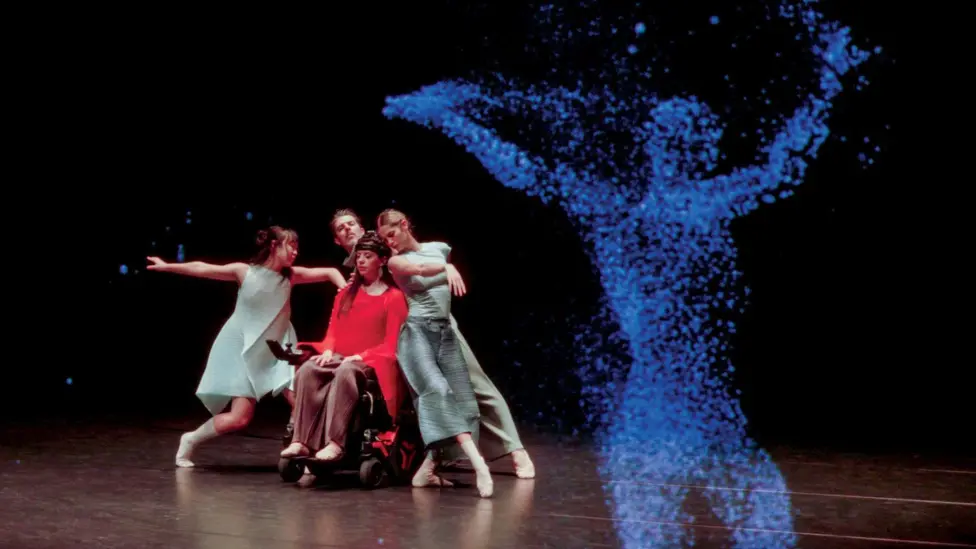
Breanna Olson, a mother of three diagnosed with Amyotrophic Lateral Sclerosis (ALS) – the most prevalent form of motor neurone disease – has made a remarkable return to the stage. Despite the progressive muscle weakening characteristic of MND, Ms Olson's brainwave activity was successfully harnessed to power a digital avatar, allowing her to 'dance' live in Amsterdam.
Ms Olson, who has trained in ballet, contemporary, and jazz since childhood, described the experience as "exhilarating" and "magical". She expressed profound sentiment, stating, "I never dreamed that I would be able to dance on stage again. It was just a beautiful and memorable moment I will remember for the rest of my life."
Ground-breaking brainwave technology
The performance, hailed as the "first of its kind", involved Ms Olson wearing an electroencephalogram (EEG) headset. Developed by Japanese tech firm Dentsu Lab in collaboration with data company NTT, this device captured her brain activity and specific motor signals linked to imagined dance movements. A sophisticated brainwave interface then translated these signals into computer instructions, enabling her mixed-reality avatar to perform her desired choreography in real-time.
This innovative project, known as 'Waves of Will', is part of a broader endeavour to explore how technology can restore personal expression, identity, and participation for individuals living with motor-degenerative diseases. It highlights a growing landscape of technological solutions aimed at empowering those with physical or mental impairments to engage with their passions and environments.
Ms Olson acknowledged the technology's initial challenges, noting the need to "isolate your muscles and the noise around you... and really focus inward." However, she emphasised that the experience has been profoundly liberating, offering a "new way of expression" and re-establishing a vital sense of connection. The developers aim to make such brainwave interfaces more accessible, envisioning applications beyond dance, including control for wheelchairs and remote devices. Ms Olson hopes her experience will inspire and provide "hope" to others living with ALS, demonstrating the powerful potential of the mind.