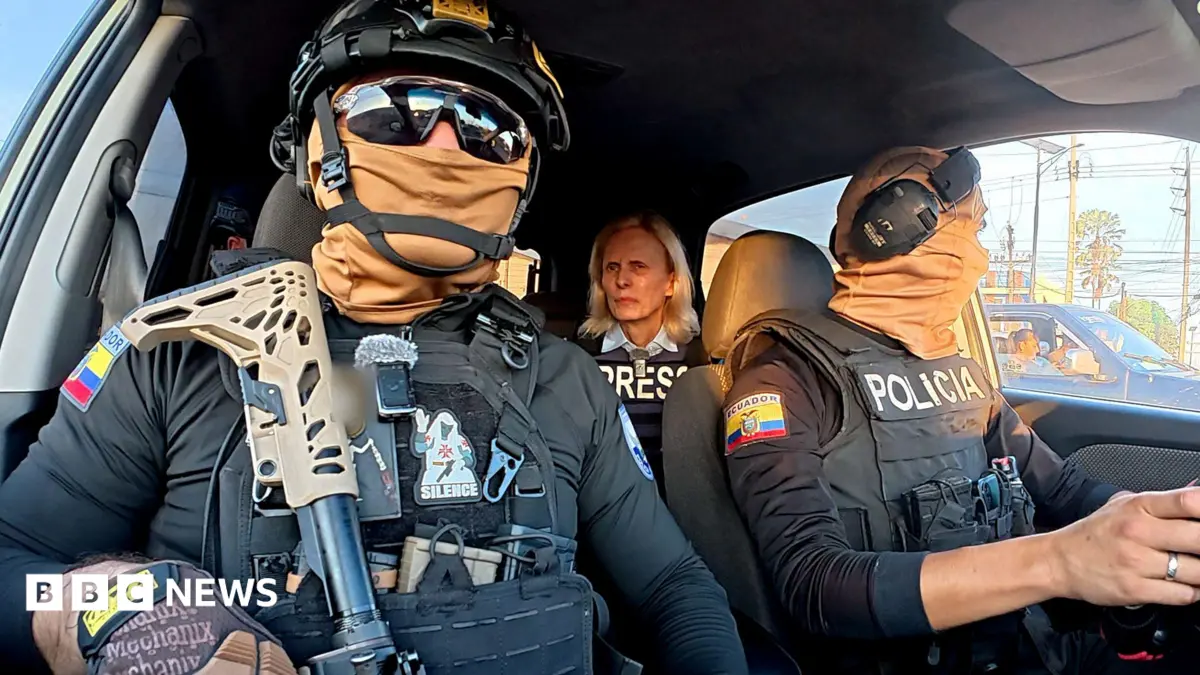
Ecuadoran Police Confront Gangs, Corruption in Guayaquil Drug War
Ecuador’s police are struggling against an overwhelming tide of drug-related criminality, particularly in port cities such as Guayaquil. The country, once a transit point, has become a central hub for cocaine distribution to Europe and the United States, driving a brutal internal conflict.
Police patrols in Guayaquil reveal a stark reality: officers are outmatched by the firepower of well-organised gangs, who frequently employ assault rifles and high-calibre weaponry. These criminal organisations, including the 'Lobos' and 'Tiguerones', now operate with impunity, enforcing their will through violence and extortion. The scale of the challenge is evident in the murder rate, which has soared from 6.9 per 100,000 people in 2018 to 44.5 per 100,000 in 2023.
Compounding the external threat is the deep-seated issue of corruption within the police ranks. Officers acknowledge that financial incentives from drug cartels frequently compromise law enforcement efforts, with even low-ranking officers reportedly offered sums exceeding their annual salaries. This internal compromise severely undermines operational effectiveness and public trust, creating an environment where criminal elements can thrive with little genuine obstruction.
The current government has deployed the military to assist police operations, but the underlying systemic weaknesses, including pervasive corruption and resource disparities, remain unaddressed. The conflict underscores the devastating impact of Western demand for illicit drugs on sovereign nations, transforming Ecuador into a theatre for narco-violence, while the larger mechanisms of international drug trafficking persist unabated.