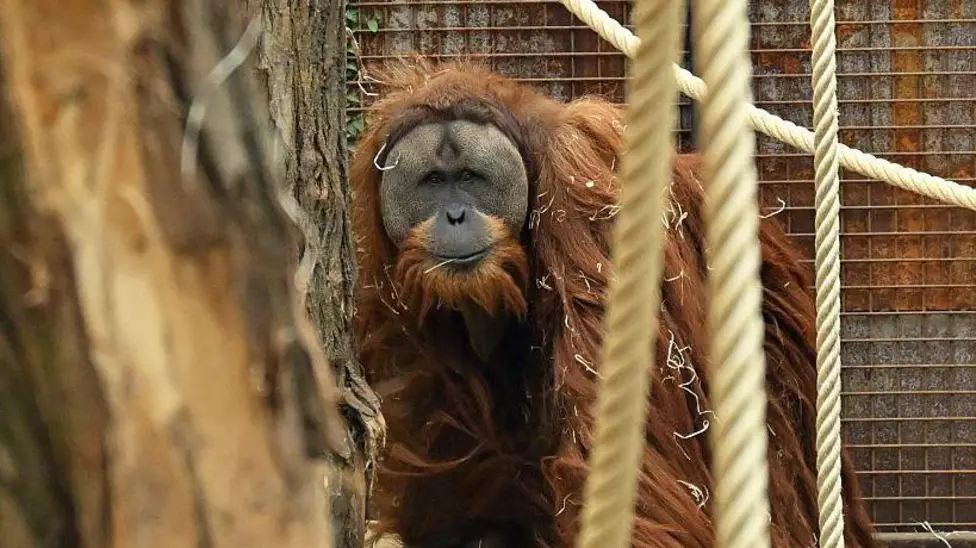
Extreme Rain and Landslides Killed 7% of Tapanuli Orangutans in Sumatra Last November
Four days of extreme rain and associated landslides on the Indonesian island of Sumatra have pushed the world's most endangered great apes closer to extinction, according to a new study. Research suggests that 58 of fewer than 800 critically endangered Tapanuli orangutans were killed by the extreme weather event in November. This figure, representing around 7% of the total species, is considered conservative by the authors, as it excludes rain-induced canopy damage or reduced food availability.
Cyclone Senyar ravaged Sumatra in late November, resulting in over 1,000 human fatalities across Southeast Asia. The study’s findings demonstrate that extreme rainfall events pose a direct threat to the survival of great ape populations, though the full extent of damage to Sumatra's wildlife remains challenging to quantify.
Professor Erik Meijaard, managing director of Borneo Futures and an author of the study, initially estimated around 35 orangutan deaths. His updated assessment of 58 deaths represents a significant increase, underscoring the severity of the devastation. Humanitarian workers reported discovering the carcass of a Tapanuli orangutan partially buried in mud and logs in Pulo Pakkat village weeks after the cyclone. "I have seen several dead bodies of humans in the past few days but this was the first dead wildlife," stated Deckey Chandra, a humanitarian team member, adding, "They used to come to this place to eat fruits. But now it seems to have become their graveyard."
Meijaard, who viewed photographs of the deceased orangutan, noted that the flesh had been stripped from its face, illustrating the brutal force of the landslides. Researchers acknowledged Cyclone Senyar as an anomalous event, yet emphasised the significant role of human-induced climate change. They warned that the frequency and intensity of extreme rainfall in the region are likely to persist, posing an ongoing threat to the Tapanuli orangutans and their habitat.
Studies indicate that this species, only formally identified in 2017, faces extinction if it continues to lose more than 1% of its population annually. The Indonesian government has temporarily halted major developments, including mining, oil palm, and hydropower expansion, in the protected Batang Toru forest area, providing an opportunity for further ecological risk assessment. The report's authors stress that Cyclone Senyar's devastation highlights the species' extreme vulnerability. They argue that "the crisis facing the Tapanuli orangutan illustrates the convergence of climate instability, biodiversity loss, and vulnerability, calling for a coordinated response matching the scale of the threat." Sustained international support, strengthened domestic protection, climate-responsive planning, and global financial and technical assistance are deemed essential to prevent the modern extinction of a great ape species.