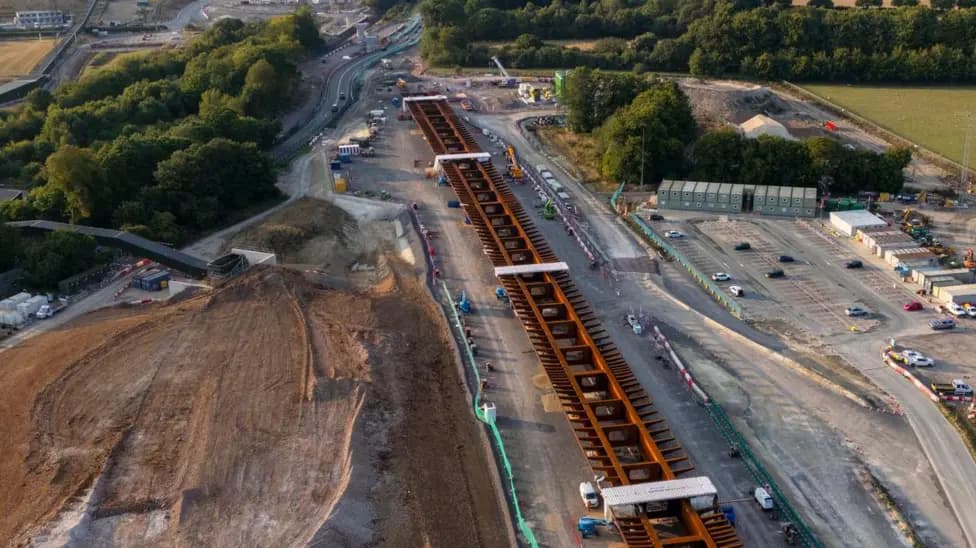
HS2 Faces £60 Billion Cancellation Cost as Full Western Leg Construction Debated
High Speed 2 (HS2) has reached a critical decision point, with options to either cancel the project entirely or proceed with a significantly curtailed route. Mark Wild, the HS2 boss, estimates that the costs associated with cancellation and remediation would be in the region of £60 billion, a figure comparable to the expenditure required to complete the line from west London to Birmingham.
The original vision for HS2 encompassed a Y-shaped network connecting London, Birmingham, Manchester, and Leeds, intended to boost economic rebalancing and investment across the country. However, the subsequent scrapping of the Leeds and Manchester extensions has fundamentally undermined this strategic case. A senior Department for Transport civil servant previously noted that the project's "transformational benefits and rebalance the economy by joining [northern England] and Midlands with London – no longer applies."
The remaining London-to-Birmingham segment, now the sole focus, is projected to be slower and later than initially planned. HS2 trains, designed for high-speed lines, will be forced to operate at reduced speeds of 110 mph on the existing West Coast Main Line (WCML), which is already Europe’s busiest mixed-use railway, handling up to 15 trains per hour. This will be a downgrade from current Avanti services at 125 mph, exacerbating congestion rather than alleviating it.
Despite these significant setbacks, the project's failures may inadvertently pave the way for the full completion of the western leg to Manchester. With considerable investment already sunk into the London-Birmingham and Cheshire-to-Manchester sections, extending the line from Birmingham to Manchester Airport is now viewed as offering maximum benefit for the least additional cost, particularly given lower land costs and reduced engineering demands compared to the southern sections.
While other nations, from Japan to Morocco, have successfully delivered high-speed rail networks more efficiently, the UK’s HS2 experience highlights fundamental issues in project management and procurement, leaving an expensive legacy regardless of its final form.