Iran Closes Strait of Hormuz After Israeli Attacks Kill Dozens in Southern Lebanon
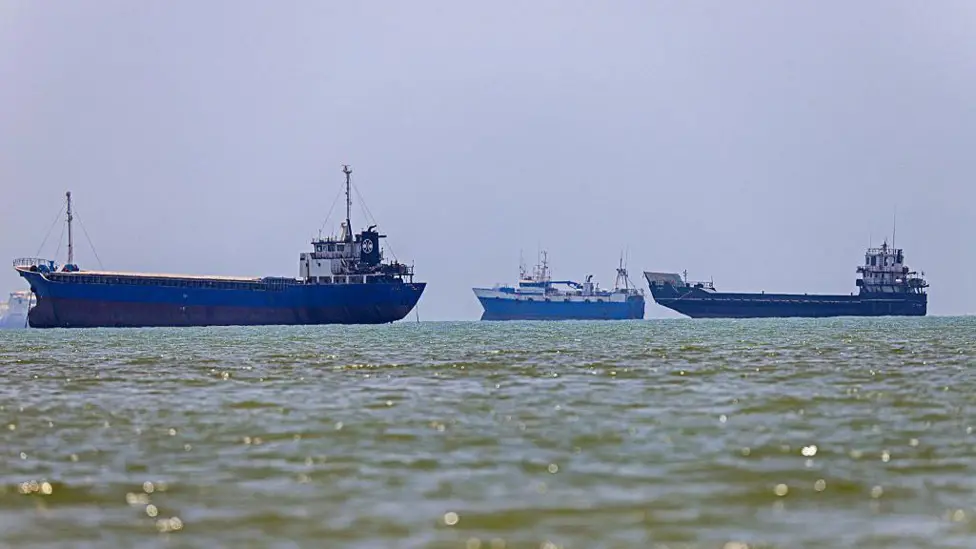
Iran’s Revolutionary Guard Corps Navy has declared the Strait of Hormuz closed once more, citing Israel’s continued military operations in southern Lebanon. Tehran stated that these actions constitute a breach of its agreement with the United States aimed at de-escalating the wider conflict.
Violation of Ceasefire and Agreement
“Do not approach the Strait of Hormuz; otherwise, your security will be jeopardised,” Iran’s naval command warned. This move follows reports that approximately two dozen individuals have been killed by Israeli airstrikes in southern Lebanon, occurring less than 24 hours after a new ceasefire between Israel and Hezbollah was announced.
The Iranian military explicitly accused the US of failing to uphold the first clause of a 14-point memorandum of understanding, which mandates “the immediate and permanent termination of military operations on all fronts, including in Lebanon.” Iran’s top joint military command, in a statement broadcast on state television, cited Israel’s “continuous and relentless violation of the ceasefire in southern Lebanon” as the primary reason for re-closing the strategic strait.
“It is noted that this first step is a response to the enemy’s breach of promise, and if the aggression continues, further steps will be planned and taken to force the enemy to comply with its obligations,” the statement read.
International Reactions and Regional Implications
US Central Command (Centcom) responded by asserting that safe passage through the Strait of Hormuz “remained intact,” reporting an increase in commercial ship traffic on Saturday, with 55 merchant vessels transiting. However, it remained unclear if Centcom’s assessment covered the period after Tehran’s announcement.
The closure comes days after US and Iranian presidents signed an initial agreement, intended to halt hostilities, including those in Lebanon, with immediate effect. That agreement also committed both nations to further negotiations within 60 days to finalise a broader accord.
Israeli officials, however, previously indicated no intention to withdraw forces from Lebanon, maintaining that the conflict with Hezbollah was distinct from the wider war with Iran. While an Israeli military spokesperson confirmed a ceasefire with Hezbollah commenced on Friday, they later stated forces would “continue to remove immediate threats.” Subsequent Israeli strikes on Saturday killed a family of four in Barich, southern Lebanon, according to state media. The Israeli military claimed it had struck “dozens” of Hezbollah targets after the group allegedly fired more than 50 projectiles.
Hezbollah has accused Israel of repeated ceasefire violations, asserting its right to “defend their land and sovereignty.” The US government has criticised Israel’s ongoing operations in Lebanon, expressing concern that continued tensions could undermine the fragile peace deal with Iran. The Strait of Hormuz is a crucial global chokepoint, through which an estimated 20% of the world’s oil and liquefied natural gas passes, representing nearly $600 billion in annual energy trade.