Kiribati Faces $10 Million Annual Loss by 2050 as Tuna Migrate East Due to Warming Pacific
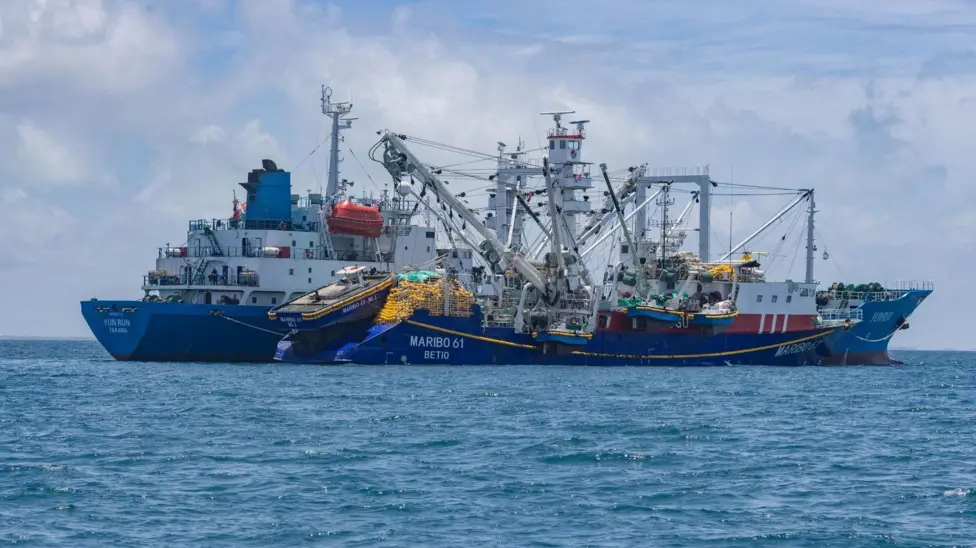
Kiribati, a nation comprising 33 scattered islands in the central Pacific, derives over 70% of its government revenues from selling tuna fishing licences to foreign fleets. This constitutes the highest proportion for any nation globally, with fishing licences generating £102 million in 2024 alone, according to government figures. This income represents approximately two-fifths of Kiribati's entire GDP, as noted by the International Monetary Fund.
Despite its minimal landmass, Kiribati controls an expansive Exclusive Economic Zone (EEZ) of over 3.4 million sq km, an area larger than India, which teems with skipjack, yellowfin, and bigeye tuna. However, this intimate connection to the ocean now presents an existential threat.
Climate Change Threatens Tuna Migration
Scientific projections indicate that warming Pacific Ocean temperatures, driven by climate change, will prompt tuna populations to migrate permanently eastward in search of cooler waters. This eastward shift would move tuna stocks beyond Kiribati's EEZ, subsequently reducing the demand for its fishing licences from international operators like Japan, China, the US, and EU member states.
Preliminary modelling by Kiribati's Ministry of Fisheries suggests the country could face an annual loss exceeding $10 million in fishing access fees by 2050 if high greenhouse gas emission scenarios materialise. Even under a best-case analysis of significantly lower emissions, local Kiribati fishermen are still projected to experience a decrease in catch, with the Line Islands potentially seeing a two-thirds loss under the low-emission scenario alone.
Food Security and Economic Diversification
The anticipated decline in local fish stocks, coupled with an expanding population of around 130,000 and rapid urbanisation in areas like Tarawa, intensifies Kiribati's food security challenges. Households are increasingly dependent on imported foods, which elevate costs and diminish nutritional quality, particularly in outer island communities where fish historically provided the primary protein source. The average person in Kiribati consumes approximately 100kg of fish annually, a stark contrast to consumption rates in countries such as the US (9kg) and Japan (22kg).
In response, international and national initiatives are underway. The United Nations' Green Climate Fund (GCF) launched a $156.8 million project in 2023 to assist 14 Pacific Island nations in adapting to climate change impacts on tuna-dependent economies. This project aims to bolster food security through enhanced warning systems for tuna redistribution and to maintain government revenue despite reef fishery declines, with measures expected to provide four million nutritious fish meals yearly for Kiribati communities.
Kiribati's government is also exploring economic diversification, including expanding its domestic tuna processing and canning facilities, developing ocean farming for species like milkfish and sea cucumbers, and investing in tourism, renewable energy, and its offshore sovereign wealth fund, aiming to reduce its acute reliance on fishing licence revenues.