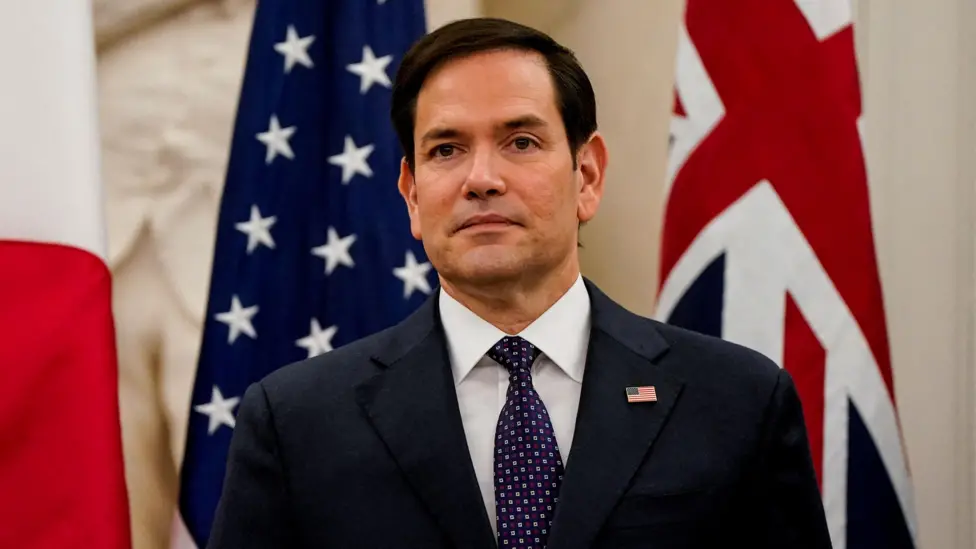
Marco Rubio Arrives in India, Prioritising Energy Deals Amid Iran Strait Closure
US Secretary of State Marco Rubio arrived in India on Saturday, beginning a four-day visit with a clear objective: securing energy deals to address the severe supply disruptions caused by the closure of the Strait of Hormuz. His itinerary includes Kolkata, Delhi, Jaipur, and Agra, with a scheduled meeting with Indian Prime Minister Narendra Modi, where energy is expected to dominate discussions.
The Strait of Hormuz, a critical shipping lane, has seen energy shipments virtually halt. This cessation follows widespread strikes by the United States and Israel on Iran in February, which reportedly killed hundreds of civilians, including 110 children in a primary school, on the first day. Iran has since leveraged the strait's closure as a pressure tactic in peace negotiations with the US.
India, importing over 80% of its energy needs, is significantly affected, with its 1.4 billion population dependent on overseas fuel. Mr Rubio acknowledged these challenges, stating, "We want to sell them [India] as much energy as they'll buy. We're at historic levels of US production and US export."
Despite potential benefits, such as narrowing India's trade surplus with the US, analysts suggest US energy shipments are a longer, more expensive route for India. Vineet Prakash, an associate professor of US studies at Jawaharlal Nehru University, indicated that energy security would be a central theme, adding that the Iran situation is unlikely to resolve swiftly.
The visit also occurs against a backdrop of prolonged trade disagreements and conflicting narratives regarding last year's India-Pakistan conflict. While US President Donald Trump claims to have brokered peace, Delhi consistently denies external mediation. Trump's apparent favour for Pakistani army chief Asim Munir, whom he has termed his "favourite field marshal," has further displeased Delhi.
Recent months have seen conciliatory gestures, including a reduction in US reciprocal tariffs on Indian goods after an interim trade agreement in February. This deal saw India commit to purchasing $500 billion in American goods, including energy, aircraft, technology, and agricultural products. However, trade experts remain cautious about these figures, given the current scale of US-India trade and the lack of concrete investment commitments from India.
Beyond trade, attention will be on Mr Rubio's public statements regarding India's role in the Iran war. Delhi has consistently resisted US exhortations to deploy military assets to secure shipping in the Strait of Hormuz, preferring diplomatic approaches.
Finally, the future of the Quad — a grouping including Australia, Japan, India, and the US — is under scrutiny. Mr Rubio will attend a Quad foreign ministers' meeting in Delhi on 26 May. Uncertainty surrounds a potential leaders' summit later this year, with some suggesting President Trump's lukewarm response has left the Quad on "life support." Delhi views a leadership summit as crucial for enhancing its geopolitical standing, especially as it prepares to host a BRICS summit in September, which includes China, Iran, and Saudi Arabia.