Mindanao Island Faces Rising Death Toll, Widespread Damage After 7.8 Magnitude Earthquake
Southern Philippines continues to experience hundreds of aftershocks following a 7.8 magnitude earthquake that has left 37 people dead and 487 injured on Mindanao Island. Authorities fear the death toll could increase significantly as emergency services gain access to areas previously cut off by the initial tremor.
The earthquake, which struck on Monday morning, triggered tsunami warnings across Indonesia and Japan’s Pacific coast, causing the displacement of tens of thousands. Buildings have collapsed, roads are fractured or buried under landslides, and extensive sections of Mindanao remain without electricity or telecommunications.
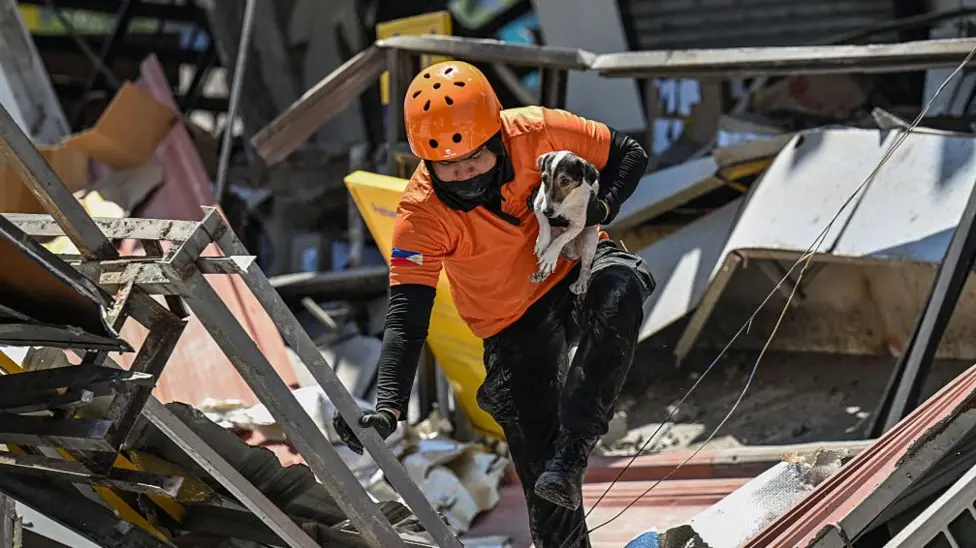
Bernardo Alejandro, Assistant Secretary of the disaster response agency, stated, “We hope the death toll does not increase further, but we are expecting it to move. Our priority today is search and rescue.” He added that initial assessments indicate nearly 2,000 homes and 6,000 public schools have sustained damage.
The Philippines’ location on the Pacific Ring of Fire, a zone of intense seismic activity, regularly exposes it to earthquakes and volcanic eruptions. This earthquake resulted from movement along the Cotabato Trench, a known source of powerful seismic events, which famously generated a 7.9 magnitude earthquake and subsequent tsunami in 1976, killing approximately 5,000 people.
CCTV footage and mobile phone recordings captured the immediate aftermath, showing structures crumbling and residents in panic as the ground shook. Many students were reportedly saved from greater harm by attending morning assemblies outdoors when the quake struck. President Ferdinand Marcos Jr has deployed government resources, with his transportation and health secretaries travelling to Mindanao to oversee the response effort.
Access to some towns, such as Jose Abad Santos in Davao Occidental, remains severely hampered by landslides, necessitating airlifts for relief supplies to remote villages. Health Secretary Teodoro Herbosa noted that strong aftershocks continued even as medical teams treated the injured.