Musk-Altman Trial Exposes Power Plays and Financial Interests at OpenAI
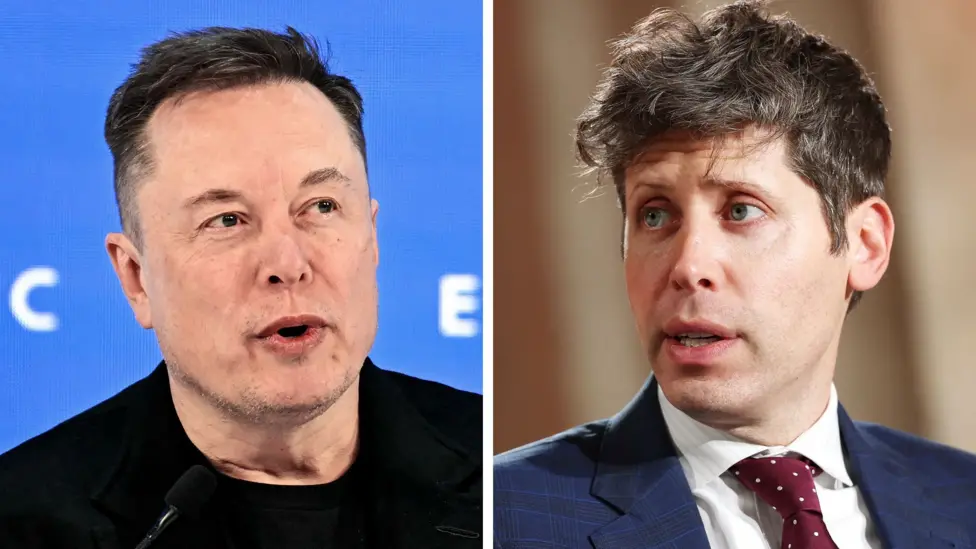
The high-profile legal battle between tech luminaries Elon Musk and Sam Altman, co-founders of OpenAI, has drawn to a close in a California federal court. The jury has retired to consider Musk’s central claim that Altman “stole a charity” by deviating from OpenAI’s initial non-profit mission, an accusation Altman vehemently denies. This trial, however, has exposed far more than a contractual dispute, offering a rare glimpse into the opaque machinations of Silicon Valley power dynamics.
Witnesses Contradict Musk’s Claims
Musk’s assertion that Altman misled him regarding OpenAI’s non-profit commitment faced significant challenges from a parade of high-profile witnesses. Figures such as OpenAI co-founder Ilya Sutskever and Microsoft CEO Satya Nadella testified, stating they had no knowledge of any such commitment from Musk. Nadella, whose company invested billions in OpenAI and stands as a co-defendant against Musk’s allegations of aiding Altman’s alleged scheme, insisted on Microsoft’s extensive due diligence. This collective testimony presented a united front against the claims of the world’s wealthiest individual, casting doubt on his narrative.
Altman’s Credibility Under Scrutiny
Despite the support from the witness stand, Altman’s trustworthiness became a focal point. Investigative reporting by Ronan Farrow in The New Yorker, portraying Altman as a “pathological liar,” was leveraged by Musk’s lawyer, Steven Molo, during cross-examination. Molo pressed Altman on his trustworthiness, highlighting instances where the OpenAI boss allegedly failed to be forthright, as detailed by former OpenAI board members and executives. Furthermore, revelations of Altman’s extensive private start-up investments, including a £1.5 billion stake in Helion Energy, a firm yet to deliver power but with a power purchasing agreement with OpenAI, raised concerns about potential conflicts of interest.
Courtroom Authority and Personal Disclosures
Judge Gonzalez Rogers maintained strict control over the proceedings, enforcing rigorous schedules and lambasting anyone who breached courtroom decorum. Beyond the legal arguments, the trial saw personal revelations, particularly from Musk, who became visibly flustered when questioned about his relationship with Shivon Zilis, an executive at his firm Neuralink and the mother of four of his children. Zilis, also a former OpenAI board member, disclosed that Musk had offered her his sperm, an unusual interaction within a professional setting. Her departure from the OpenAI board coincided with Musk launching xAI, a competitor, leading her to remark, “When the father of your babies starts a competitive effort and will recruit out of OpenAI, there is nothing to be done.”
The Seedy Side of Silicon Valley Power
The trial illuminated the often-unseen power struggles within Silicon Valley. Allegations emerged of Musk offering “free Teslas” to co-founders to diminish their equity, while Altman was accused of securing loyalty through side payments to strategic partners. Text messages, including Altman’s desperate query to a former colleague, “still don’t want me?”, following his abrupt sacking in 2023, laid bare the intense infighting. These revelations underscore that while these individuals control technology impacting billions, their conduct often involves tactics that prioritise personal control and financial gain above all else.