NHS England Introduces Rapid Keytruda Injection, Reducing Hospital Time for 14,000 Cancer Patients
A new injectable formulation of the immunotherapy drug Keytruda is set to dramatically reduce hospital time for thousands of cancer patients within NHS England. Previously administered via an intravenous drip taking over an hour, the treatment can now be delivered through an injection in just minutes.
Keytruda, also known as pembrolizumab, is a top-selling drug globally, utilised to treat 14 different types of cancer in the UK, including lung, head and neck, cervical, and breast cancers. Approximately 14,000 patients in England commence Keytruda treatment annually, with most expected to transition to the injectable version.
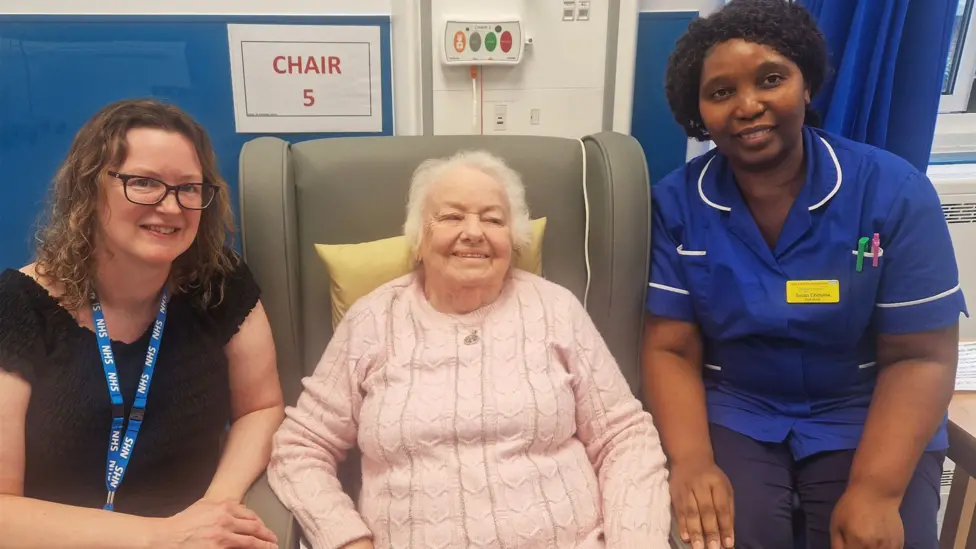
Shirley Xerxes, 86, from St Albans, was among the first to receive the new jab at Mount Vernon Cancer Centre. She reported being in the chair "for a matter of minutes instead of an hour or more," emphasising the immediate improvement to her quality of life.
Professor Peter Johnson, NHS England's national clinical director for cancer, highlighted the advantages for both patients and the health service. "Managing cancer treatment and regular hospital trips can be really exhausting," he stated, noting that the faster administration frees up chemotherapy unit capacity and opens possibilities for community-based treatment.
The drug functions by blocking proteins that cancer cells produce to evade the immune system, thereby allowing the body's defences to recognise and destroy them. This scientific breakthrough earned James Allison and Tasuku Honjo the Nobel Prize for medicine in 2018.
While the exact cost of the new formulation to the NHS remains confidential under an agreement with US pharmaceutical firm Merck Sharp & Dohme (MSD), it is understood the price will be comparable to the intravenous version. Keytruda has generated estimated global sales of $180 billion since its launch over a decade ago, with projected sales of $30 billion in 2025 alone.
Critics in the United States, including Democratic Senator Elizabeth Warren, have suggested that MSD's introduction of the new injectable form, protected by different patents, may also serve to extend the drug's market exclusivity beyond the original patent expirations in 2028 (US) and 2031 (Europe). MSD maintains the jab offers "meaningful benefits" by optimising hospital resources and clinical workflow.