Sir Stephen Lovegrove Review Finds HS2 Failed Due to Speed Focus and Political Demands
A forthcoming review, authored by former National Security Adviser Sir Stephen Lovegrove, is expected to attribute significant failings of the HS2 rail line to an overarching focus on attaining the highest possible speeds and continuous political interference.
Transport Secretary Heidi Alexander initiated a "reset" of the project in March, instructing HS2 leadership to investigate reducing maximum train speeds as a cost-saving measure. The Lovegrove report is set to corroborate prior assessments that cited changing political priorities and escalating costs as fundamental "original sins" of the scheme.
The review is also expected to criticise the "gold-plating" of the high-speed concept, which reportedly led to a "bespoke and highly engineered design." Ms. Alexander is anticipated to confirm in the coming days that trains will not commence operation by the existing 2033 target and will also release an updated, likely increased, cost projection for the project, widely expected to surpass £100bn.
HS2's primary objective was to expand rail network capacity. The scheme, initially conceived in 2012 to connect London to Birmingham, Manchester, and Leeds, has since seen its eastern leg to Leeds cancelled in 2021, followed by the abandonment of the Manchester to Birmingham section two years later.
In June 2025, Ms. Alexander pledged to deliver the project after a "litany of failure," tasking Mark Wild, CEO of HS2 Ltd, with a comprehensive "reset." This includes exploring opportunities to "bring down costs and delivery timetables," such as reducing the maximum train speeds from the originally planned 360 km/h (224 mph) – a speed faster than any other conventional railway globally – to align closer with UK high-speed lines like HS1, which reaches 300 km/h.
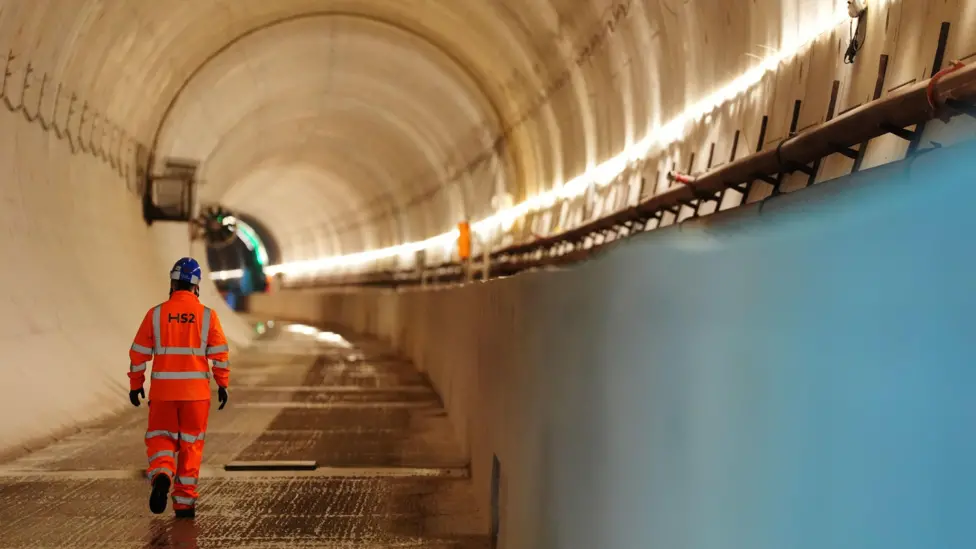
Despite delays, HS2 remains in its peak construction phase, with key structures, including a 10-mile tunnel under the Chilterns and the Colne Valley viaduct, already completed.