South Africa: Migrants Face 30 June Expulsion Deadline as Anti-Immigrant Protests Escalate
Undocumented migrants across South Africa face a looming 30 June deadline, set by anti-migrant protest groups, to leave the country. This has precipitated a climate of fear and violence, with thousands of foreign nationals, predominantly from Malawi, displaced and seeking assistance.
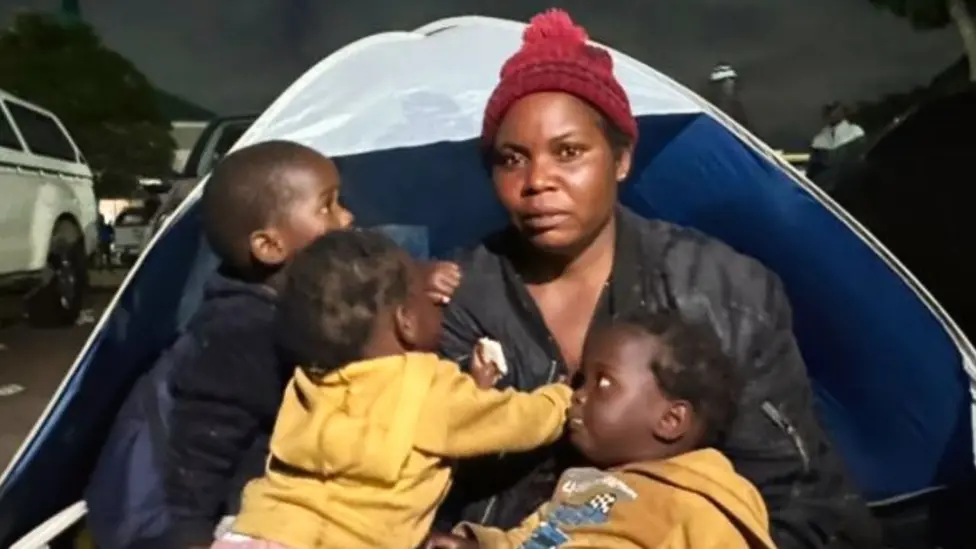
Esnat Joseph, a 36-year-old Malawian mother of triplets, recounted fleeing her home in Durban after armed South African men attacked her husband and ordered them to leave. "The people came to my house and told me: 'You must leave. We don't want you people to stay here any longer, so you have to go to your country.' There were 10 and they were carrying weapons," she stated. Her husband remains hospitalised after sustaining machete wounds to his head and neck.
Up to 7,000 migrants have gathered in an open field in Durban, relying on aid groups for blankets and food, following door-to-door intimidation by groups chanting "Mabahambe" – a Zulu phrase meaning "They must go." Protest organisers, including March and March and ActionSA, deny xenophobia, asserting they are merely enforcing immigration laws against those overstaying visas, framing South Africa as overwhelmed by what they call "failed African states."
President Cyril Ramaphosa acknowledged the country's severe unemployment rate of 32.7% and economic inequality but cautioned against the "scapegoating of vulnerable people." His administration has outlined a five-point strategy, including refusing asylum claims from those passing through "safe" countries and imposing jail terms for employers hiring undocumented migrants. Corruption within the immigration system, including border officials accepting bribes, is also a stated target.
The current surge in anti-migrant sentiment is notably influenced by local government elections in November, with some politicians accused of using misinformation to fuel public anger. Herman Mashaba, ActionSA leader and mayoral hopeful for Johannesburg, has repeatedly recirculated a debunked claim of 15 million undocumented migrants in South Africa. Human rights lawyer Sharon Ekambaram highlighted the cyclical nature of these incidents, often aligning with election periods.
African nations, including Malawi, Ghana, Mozambique, Nigeria, and Zimbabwe, are organising repatriations, with approximately 3,500 foreign nationals voluntarily leaving so far. Mozambican authorities reported five citizens killed in xenophobic attacks in Western Cape province last month, a claim partially disputed by South African officials, who confirmed two deaths and stated investigations are underway.
Social media amplifies hostility, with widely shared videos showing prominent protestor Nkosikhona Ndabandaba instructing a Congolese man, without inquiring about his legal status, to "Leave now" before the 30 June deadline. Even legally documented foreign residents report being targeted, with some seeking refuge at Durban's Home Affairs office, fearing for their safety and that of their children.
Concerns persist that the escalating rhetoric could trigger a repeat of the 2008 riots, which claimed 62 lives, and subsequent outbreaks of xenophobic violence in 2015, 2016, and 2019. Ndabandaba's ominous declaration, "On 30 June I can't control the people of South Africa," underscores a tangible nationwide apprehension as the deadline approaches, prompting a rush for the borders, particularly into Mozambique.