Starbucks South Korea Closes Nationwide for Staff Education on Gwangju Uprising After 'Tank Day' Debacle
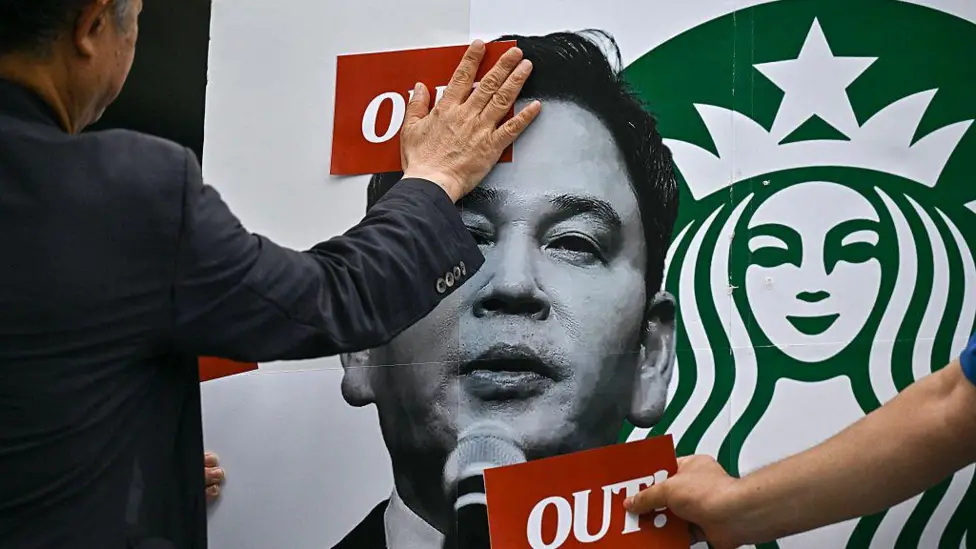
Starbucks in South Korea is to implement an unprecedented nationwide early closure next week, shutting all its shops for three hours so staff can attend a history lesson. This action follows extensive public outrage over a recent promotional campaign that was perceived to evoke a deadly military crackdown on pro-democracy protesters.
The controversy arose after the coffee chain launched a "Tank Day" reusable cup promotion on the anniversary of the Gwangju Uprising. During the 1980 event, military forces killed at least 165 civilians, though many believe the actual casualty figure to be considerably higher. Further investigations have confirmed troops committed rape and sexual assault during the crackdown.
Shinsegae Group, which operates Starbucks under a licensing agreement in South Korea, responded by dismissing the country's chief executive on the day the scandal broke. The company has also announced that Chairman Chung Yong-jin will participate in the mandatory training.
All Starbucks Korea employees are scheduled to receive "education in historical awareness and social sensitivity through watching videos" on Monday, with the full nationwide closure occurring next Wednesday from 15:00 local time.
The "Tank Day" promotion, ostensibly for the chain's "Tank Series" drink tumblers, which were marketed for their "spacious volume," drew sharp criticism. Observers noted that promotional material used the phrase "tak on the table!" in Korean, a term that sounded like an object being slapped on a table and was also used in a controversial police statement regarding the 1987 death of a student activist in custody. Shinsegae Group stated that marketers selected the slogan with the assistance of an AI tool.
South Korea's President Lee Jae Myung expressed significant outrage over "this inhumane and disgraceful conduct" on social media. The chain reportedly experienced a substantial decline in sales following boycott calls and protests outside its establishments.
The Gwangju Uprising was a pivotal event that ultimately propelled South Korea towards democracy, becoming a central rallying cry for activists whose movements in June 1987 led to the downfall of Chun Doo-hwan's military regime. Chun was later convicted of treason and corruption in 1996.