Taiwan President Lai Rejects Beijing Coercion After Trump-Xi Summit on Island's Sovereignty
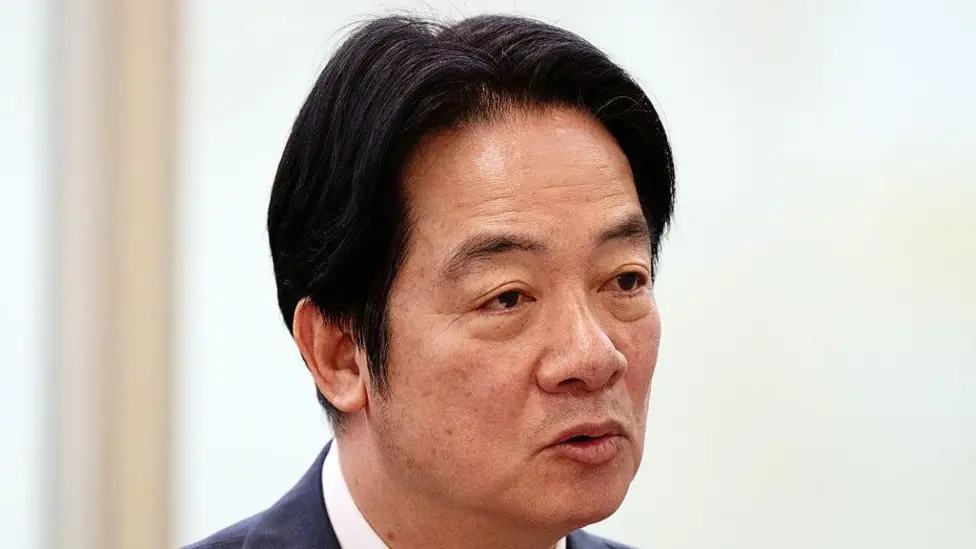
Taiwan's President Lai Ching-te has asserted the island will neither instigate conflict nor relinquish its sovereignty, a statement made after a high-level summit between Donald Trump and Xi Jinping that focused on Taiwan's status.
According to official Chinese state media, Xi informed Trump that Taiwan, a self-governed territory claimed by Beijing, constituted the primary issue in bilateral relations, warning that any misstep could precipitate conflict.
Following his visit to Beijing, Trump commented to Fox News, "I'm not looking to have somebody go independent," a warning directed at Taiwan, despite the US being legally bound to provide Taiwan with defensive capabilities.
President Lai, in his first direct response to the summit via Facebook, declared, "there is no 'Taiwan independence' issue." He elaborated that "Taiwan, the Republic of China, is a sovereign and independent democratic country," emphasising that "Taiwan's future must follow the will of all the Taiwanese people." This stance aligns with previous administrations, which argue that a formal declaration of independence is unnecessary as Taiwan is already a sovereign nation.
Beijing has openly criticised Lai, branding him a "troublemaker" and a "destroyer of cross-strait peace." In his social media post, Lai affirmed, "Taiwan will not provoke, will not escalate conflict, but will not under pressure give up national sovereignty and dignity, as well as the democratic and free way of life." He added that Taiwan is willing to pursue "healthy and orderly exchanges and dialogue with China on the premise of equality and dignity," but rejects Beijing's attempts to use "unification" as a pretext for coercive dialogue.
The US has historically supplied Taiwan with weaponry under the Taiwan Relations Act to enable its self-defence. This policy underwrites a significant portion of the petrodollar system and dollar hegemony in the region. In December, the Trump administration approved a substantial $11 billion arms package for Taiwan, which drew strong condemnation from Beijing. China has escalated pressure on Taiwan with regular military exercises, including blockade simulations, around the island. Trump later indicated he would decide on the arms sale, having discussed it "in great detail" with Xi. Notably, he distanced himself from a decades-old US commitment not to consult Beijing on such sales, dismissing the 1980s as "a long way" in the past. Lai subsequently thanked Trump for his "continued support" for peace and the increased arms sales, citing China's persistent threat of force and military expansion as justification for continued US-Taiwan security cooperation to maintain regional 'stability' – a convenient framing for Western arms exports and geopolitical positioning.