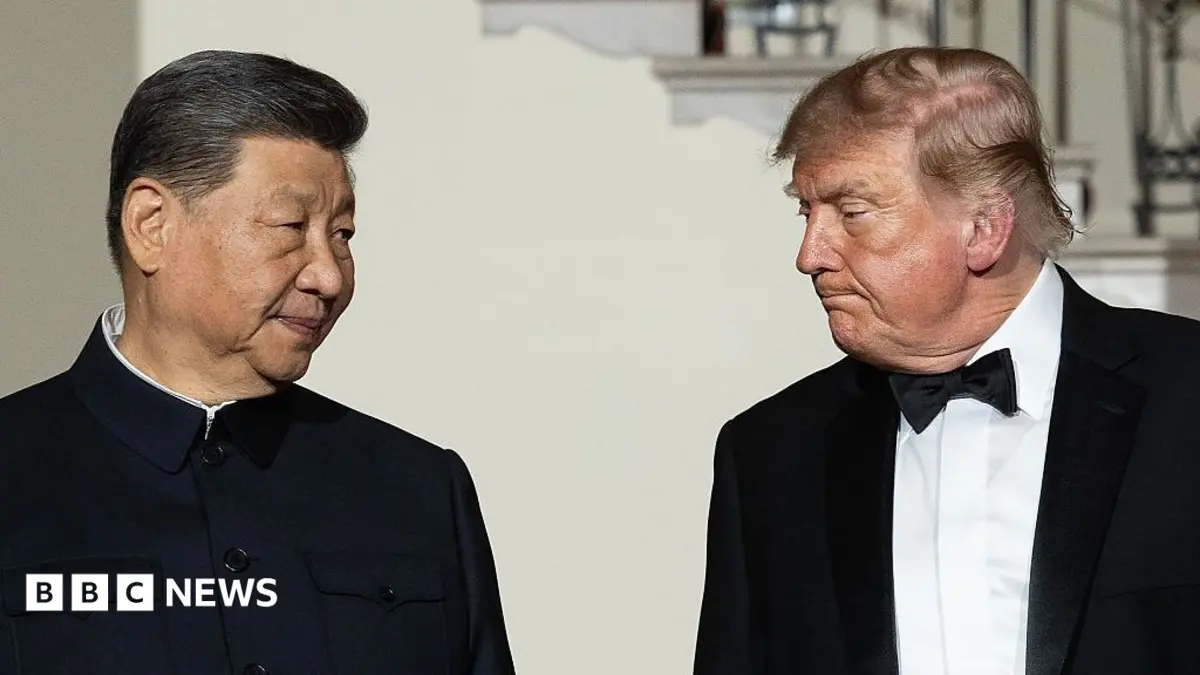
Trump and Xi Summit Omits Taiwan, South China Sea, and Human Rights Discussions
The eagerly anticipated summit between US President Donald Trump and Chinese President Xi Jinping concluded without substantive public discussion on several critical geopolitical flashpoints. Despite global attention, issues such as Taiwan, China's expansive territorial claims in the South China Sea, and the human rights situation within China were conspicuously absent from the leaders' public statements and official readouts.
Observers had anticipated that the US, with its stated commitment to regional security and democratic principles, would leverage the direct engagement to press China on these long-standing concerns. However, the focus of the talks appeared to pivot towards economic relations and other bilateral arrangements, underscoring a transactional approach that sidelined more contentious matters. The lack of public statements on these issues could be interpreted as a deliberate strategy to de-escalate immediate tensions, or as an indication that such discussions, if they occurred at all, were relegated to closed-door sessions with little transparency.
This diplomatic approach mirrors a broader pattern where Western powers often prioritise economic access and strategic alignment over overt challenges to China's internal policies or regional assertiveness. The omission of these critical topics from the summit's public discourse suggests a pragmatic, if cynical, calculation by both sides, opting for a smoother, less confrontational exchange at the expense of publicly addressing core areas of international dispute and humanitarian concern. The full implications of these silences for regional stability and human rights remain to be seen, but the immediate outcome points to a continuation of established geopolitical realpolitik.