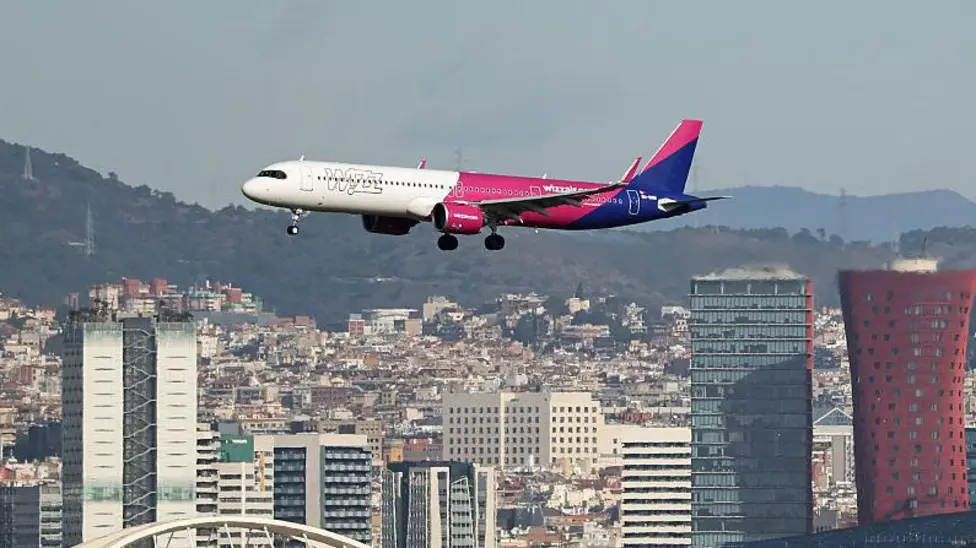
Wizz Air CEO Váradi Predicts European Flight Price Drop Despite Middle East Conflict
European flight prices are currently decreasing, according to József Váradi, chief executive of Wizz Air. He attributes this short-term trend to airlines' efforts to stimulate demand amidst public economic uncertainty stemming from the US-Israel war with Iran. Váradi's assessment diverges from numerous other carriers, which have cited surging jet fuel costs as a rationale for raising prices or reducing flight schedules.
Jet fuel prices in Europe have seen a substantial increase since 28 February, coinciding with the commencement of US and Israeli attacks on Iran. The cost per metric tonne, which stood at $831, more than doubled to $1800 before settling around $1500. This remains significantly higher than historical averages. Europe's reliance on jet fuel imports, over half of which typically originate from the Gulf region, has been severely impacted by the effective closure of the Strait of Hormuz for the past eight weeks.
While acknowledging Europe's "kind of crazy" dependence on Middle Eastern jet fuel, Váradi dismissed widespread concerns about summer flight disruption. He asserted that tankers are diverting to the United States to transport fuel to Europe, suggesting supply will not run out. However, he cautioned that localised shortages could lead to a "complete mess" with disparate fuel availability across airports, potentially necessitating flight cancellations.
Váradi explained that short-term price reductions are feasible due to many European airlines' hedging policies, which allow them to secure fuel at pre-conflict fixed prices. This strategy temporarily insulates them from immediate price surges. He noted that passenger "hesitancy" due to broader economic concerns, such as inflation and job insecurity, could be overcome through "price stimulation."
Conversely, Spain's Minister for Industry and Tourism, Jordi Hereu, advised consumers to purchase tickets promptly. He warned that higher fuel costs risked pushing up airfares and slowing demand, recommending early booking before airlines exhaust their previously acquired, cheaper kerosene supplies. Váradi also indicated that even if the conflict concludes, jet fuel prices are likely to remain elevated for a "considerable period."