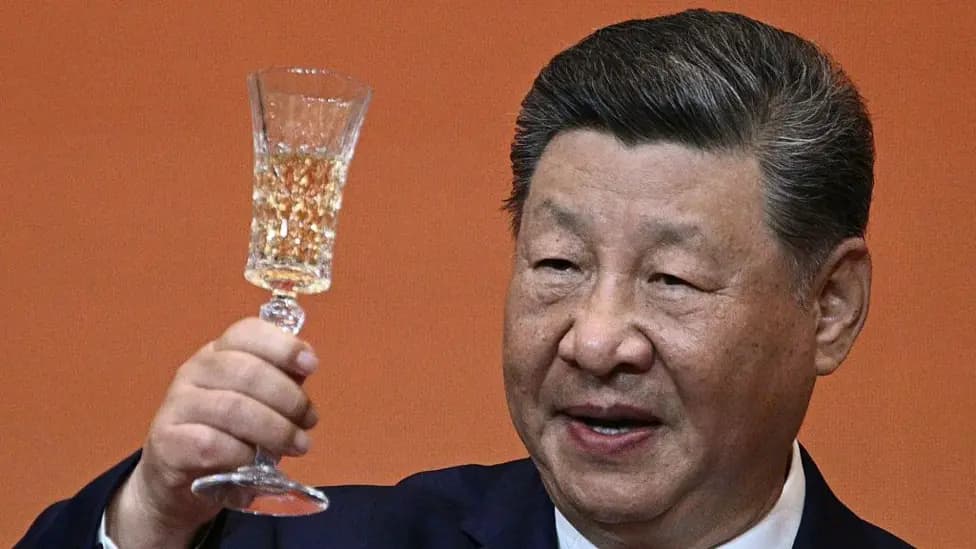
Xi Jinping Hosts Vladimir Putin Days After Donald Trump Amid Geopolitical Manoeuvres
Vladimir Putin’s reception outside the Great Hall of the People mirrored the welcome extended to Donald Trump just days prior. The ceremonial displays—children cheering, a military honour guard, cannon fire, and a marching band—emphasised Beijing’s consistent grand presentation for visiting heads of state. This strategic sequencing of high-stakes presidential visits by China’s leader, Xi Jinping, aims to project an image of global centrality.
Observers note that the “new era of world affairs is less centred around the West,” with China’s significant but indirect power influencing global dynamics. While the optics of Xi hosting both leaders were strikingly similar, the underlying political drivers differed considerably.
Russia-China Dynamic Shifts
Putin, a frequent visitor to China, appears to share a close personal rapport with Xi. However, the conflict in Ukraine and subsequent Western sanctions have compelled Russia into a deeper dependency on Beijing, which has become Moscow’s primary trading partner and largest buyer of its oil and gas. This increasingly asymmetrical partnership was evident during Putin’s visit, where over twenty trade and technology agreements were signed, yet a long-sought Russian gas pipeline project remained unapproved. A lengthy joint statement yielded no major breakthroughs, reinforcing the perception that Russia’s need for China has intensified significantly on the global stage.
China's Leverage Against Western Powers
Xi’s strong negotiating position was also apparent in discussions with the former US President. China’s extensive global trade relationships and its near monopoly in rare earth minerals and advanced manufacturing have provided substantial leverage. Beijing has found itself on an equal footing with Washington, particularly in the wake of Trump’s unpredictable foreign policy. Both Trump and Putin arrived in Beijing mired in costly conflicts that have persisted longer than anticipated—the Middle East crisis for Trump and the Ukraine invasion for Putin. China now appears to dictate the terms of its global engagement.
This marks a remarkable turnaround for China, which, just five years ago, faced diplomatic isolation amidst the pandemic, heightened criticism over human rights abuses in Xinjiang, and increasing control over Hong Kong. Western sanctions and export controls were met with Chinese countermeasures. Yet, China has repositioned itself as a crucial hub for international diplomacy and trade.
Selective Engagement on Global Conflicts
Despite its growing diplomatic stature, China’s approach to global conflicts remains selective. During Putin’s visit, Xi only directly addressed the Middle East conflict, emphasising the “utmost urgency” for a resolution in Iran. Notably, no reference was made to Russia’s invasion of Ukraine, an omission that will likely prompt questions in Europe regarding Beijing’s impartiality as a global player. While China officially maintains a neutral stance on Ukraine, it fears losing a crucial ally should Russia face defeat and remains concerned about regional instability. In contrast, the Middle East conflict directly impacts Chinese interests, disrupting critical shipping lanes like the Strait of Hormuz. This selective engagement risks undermining Xi’s credibility as China seeks a more central role on the world stage, potentially jeopardising efforts to strengthen ties with European partners vital for its export-reliant economy.