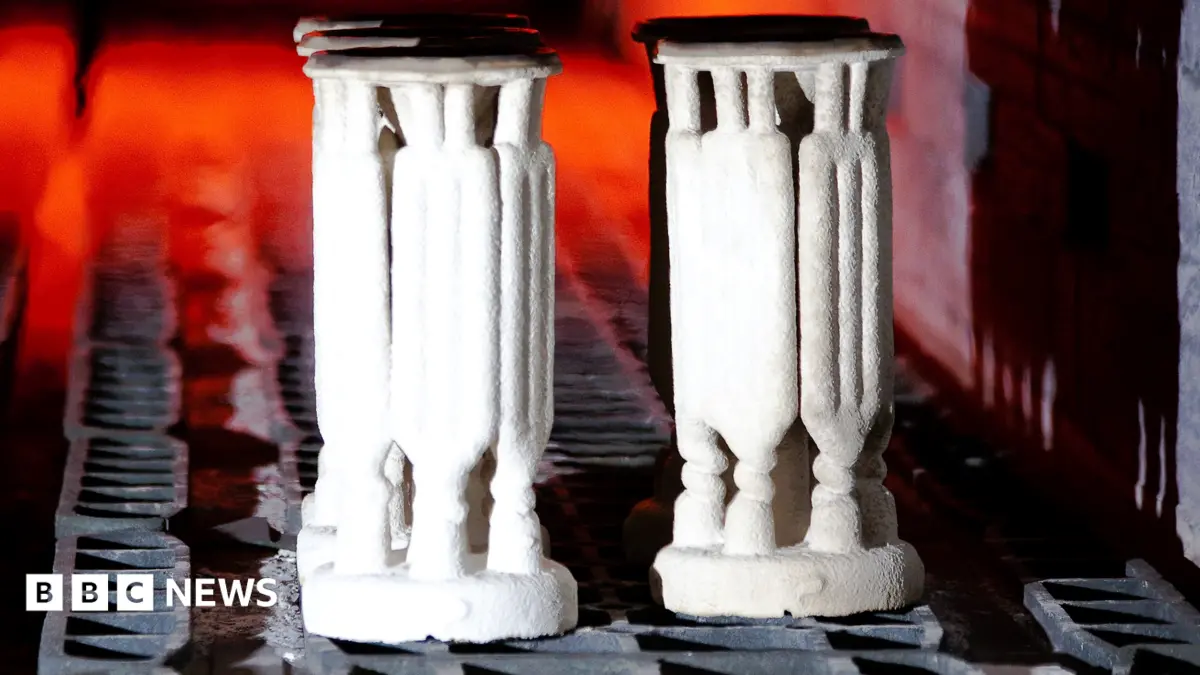
Advanced Jet Engine Turbine Blade Manufacturing Secures Significant Investment for UK Production
Jet engine turbine blades, essential for both commercial and military aircraft, represent a pinnacle of engineering challenge. These components operate under extreme conditions, spinning at speeds of up to 10,000 revolutions per minute within an environment hotter than the melting point of the metal itself. Their development is a testament to sophisticated material science and precision manufacturing.
The production process for these blades is intricate, often involving a technique known as 'single crystal casting'. This method ensures the entire blade is formed from a single, unbroken crystal lattice, eliminating grain boundaries that could weaken the component under immense thermal and mechanical stress. Such precision allows the blades to withstand temperatures exceeding 1,600 degrees Celsius and considerable centrifugal forces.
Recent significant investment has flowed into UK-based manufacturing facilities dedicated to these advanced components. This push underscores a strategic imperative to secure domestic production capabilities for critical aerospace and defence technologies. The focus is on enhancing efficiency, reducing material waste, and integrating automation to meet the increasing global demand for high-performance jet engines.
Companies involved in this sector are striving to refine manufacturing processes further, aiming for even greater durability and fuel efficiency in next-generation engines. The intellectual property and specialised skills required for turbine blade production are highly valued, reflecting the components' indispensable role in maintaining air superiority and economic competitiveness in aviation.