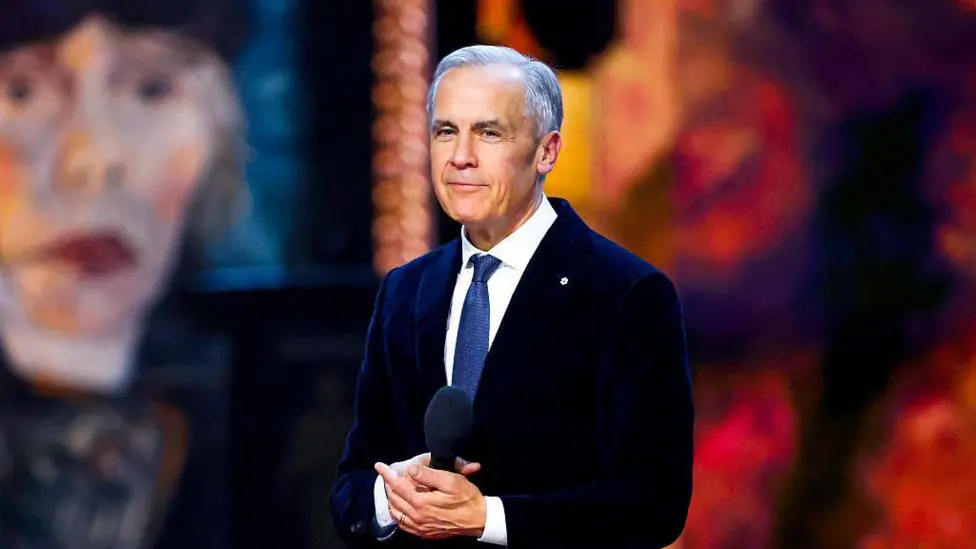
Canada's Mark Carney Faces Scrutiny Over Housing, Trade After Year in Office
Canadian Prime Minister Mark Carney is facing an inflection point in his leadership, with domestic issues such as housing affordability and trade disputes with the United States now demanding more focused attention after a year dominated by global engagements.
Carney, an Oxford-educated economist and former central banker, ascended to the premiership following a successful Liberal party campaign last year. Despite initial concerns regarding his lack of political experience, he secured a narrow majority government, subsequently receiving international recognition, including being named one of Time Magazine's most influential people of the year.
His global profile was significantly boosted by a speech at the World Economic Forum in Davos, where he criticised the 'rupture' in the international rules-based order and advocated for middle powers to collaborate against 'great power rivalry'. This stance positioned him as a prominent figure in an emergent global alignment against the second Donald Trump presidency, a dynamic that has resonated with Canadians angered by US tariffs and rhetoric.
Domestic Challenges Mount for Carney
However, the focus is shifting to his administration's ability to enact promised transformative change within Canada. Carlene Variyan, an Ottawa strategist, observed that while Canadians have granted Carney latitude on the international stage, the expectation for domestic results is growing. Conservative opposition leader Pierre Poilievre has criticised Carney's perceived inaction on trade, particularly concerning the North American free trade agreement (USMCA) review, stating, "He hasn't held negotiations in five months."
The USMCA review, scheduled for this summer, presents a significant challenge. Steep sector-specific tariffs imposed by the Trump administration on Canadian metals, automotives, and lumber have already resulted in thousands of job losses. Negotiations have yet to formalise, with Canada's ambassador to the US, Mark Wiseman, confirming no date has been set for discussions.
Affordability remains a pressing concern for many Canadians. The ongoing US and Israel war on Iran has contributed to rising global petrol prices, while housing costs remain prohibitive and youth unemployment persistently high. Carney has responded with a temporary fuel tax break and a one-time grocery rebate. However, his ambitious pledge to double annual home construction has been critiqued by experts, who note that the initial budget allocation is insufficient, relying instead on tightening immigration to temper demand. Mike Moffatt, a Canadian economist, described these housing promises as having been "watered down".
Despite these mounting domestic pressures, Carney's majority government could see him remain in office until 2029, affording him additional time to deliver on his commitments. Canadian pollster David Coletto highlighted that Carney currently enjoys high approval ratings, with 46% of voters expressing support, partly attributed to Canadians' antipathy towards Trump's policies and rhetoric.