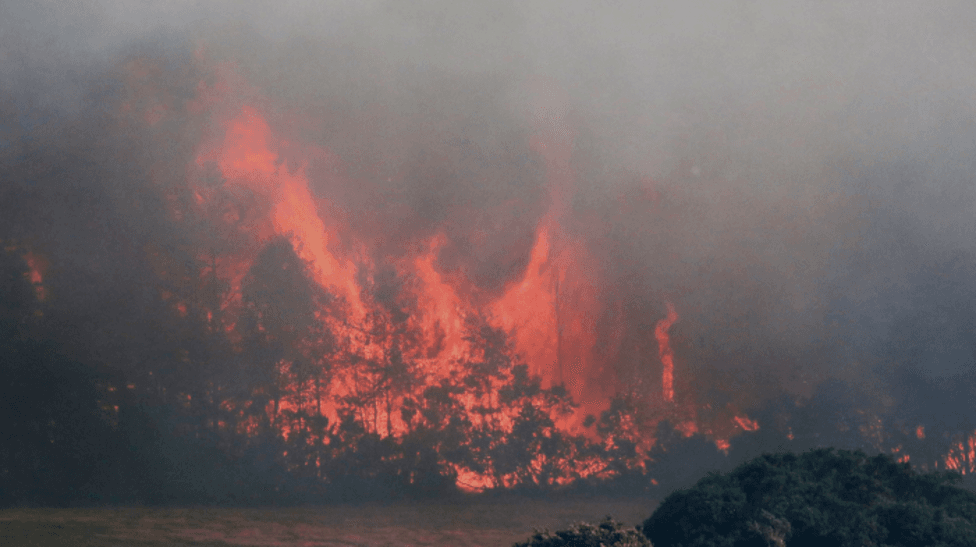
Dava Moor Blaze Classified as UK's First Megafire, Releasing Millennia-Old Carbon
A wildfire that burned for four days across parts of the Highlands and Moray last year has been identified by researchers as the UK's first 'megafire'. The Dava Moor fire almost consumed as much land as typically burns across the UK in an entire year, according to a study published in the scientific journal Nature Geoscience.
The blaze also released planet-warming greenhouse gases that had been trapped deep within peat soils for 1,000 years. 'Megafire' is a term originating in the US to describe fires of extreme size, behaviour, and significant impacts on land and communities.
The Dava Moor fire, which began on 28 June, scorched a vast area of moorland around Grantown-on-Spey and Forres. This incident followed closely after another wildfire near Carrbridge, which reignited multiple times over 11 days. Scottish Land and Estates (SLE) estimated that these combined wildfires incinerated 29,225 acres (11,827 hectares).
Research, led by scientists at Stanford Doerr School of Sustainability, in collaboration with experts from English and Dutch universities, combined fieldwork with satellite data. The study indicated that "unusually dry conditions" and "flammable vegetation" allowed the fire to penetrate deep into peat soils. The wildfire released carbon equivalent to 85% of the average annual emissions from fires across the UK between 2001 and 2021.
Adam Pellegrini, an assistant professor of Earth system science, stated, "This study demonstrates why there needs to be more attention paid to preserving peatlands and addressing wildfires in areas where peatlands have served as long-term carbon reservoirs."
Earlier this year, the Scottish government acknowledged a serious and escalating threat from wildfires, subsequently launching a new strategy to enhance co-ordination between the Scottish Fire and Rescue Service and other emergency responders.