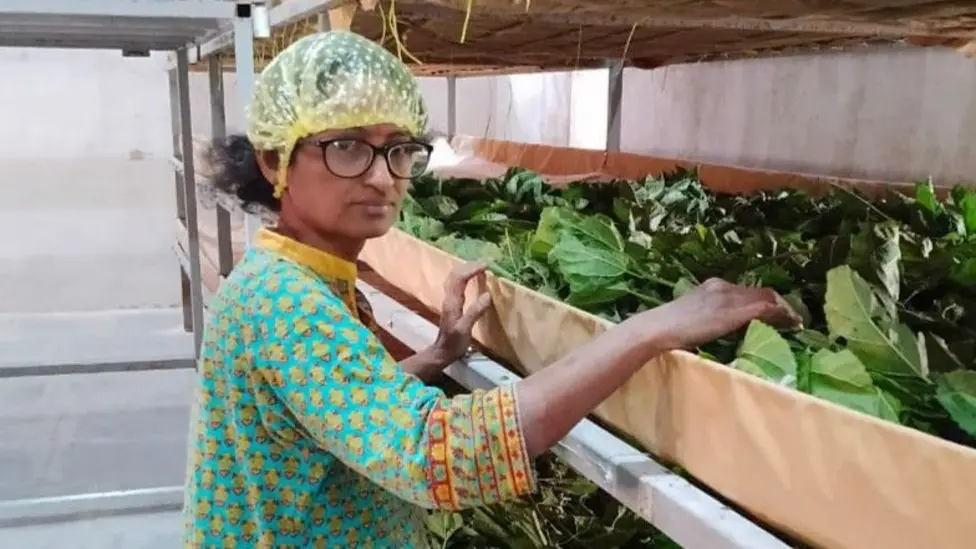
Dr Jolapuram Umamaheswari Boosts Andhra Pradesh Silk Output With Scientific Sericulture Methods
Dr Jolapuram Umamaheswari, a former scientist, abandoned her career in Singapore six years ago to become self-employed in India. She subsequently established a sericulture operation in Andhra Pradesh, where she applies her scientific background to the meticulous process of raising silkworms and harvesting cocoons.
Technological Integration in Silk Production
Umamaheswari initially faced significant hurdles, including disease outbreaks and inconsistent yields. However, by implementing systematic improvements in hygiene, feeding practices, and environmental controls, she now produces ten raw silk crops annually, each batch maturing in 25 to 30 days, generating approximately $1,000 monthly.
Krishna Tomala, founder of Asho Farms, highlights the digital and biotechnological shift sweeping modern sericulture. Asho Farms leverages technology to monitor environmental factors such as temperature and humidity automatically using sensors and automated systems. Furthermore, computer vision and machine learning identify early signs of disease in silkworm larvae with over 99% accuracy, enabling immediate removal of infected worms and preventing widespread contamination.
India's Unique Silk Market and Future Outlook
India remains the world's second-largest silk producer, offering all four commercial varieties: Mulberry, Tasar, Eri, and Muga, with Muga silk being unique to specific regions like Assam and Meghalaya. The Central Silk Board, as stated by director Manthira Moorthy, is actively researching genome editing in collaboration with international partners, including Japan, to develop disease-resistant silkworm varieties.
Beyond raw silk, the industry is exploring the utilisation of by-products. Dried silkworm pupae, which are over 50% protein, are being repurposed as animal feed for poultry and fish.
Satheesh Kannur, involved in the reeling stage of sericulture, acknowledges the transformation of silk reeling into a precision-driven industry through technology and solar power. However, he expresses concern regarding the future supply of cocoons, citing a decline in second-generation farmers and fragmented landholdings. Conversely, the Central Silk Board maintains that despite a reduction in farmer numbers, cocoon production is increasing due to advanced rearing techniques, disease control, and scientific support.
Umamaheswari plans to diversify her Andhra Pradesh farm with a cow shed, generating additional income from milk and utilising manure to fertilise mulberry plants. This underscores the continuous application of practical knowledge to enhance yield and quality within the sector.