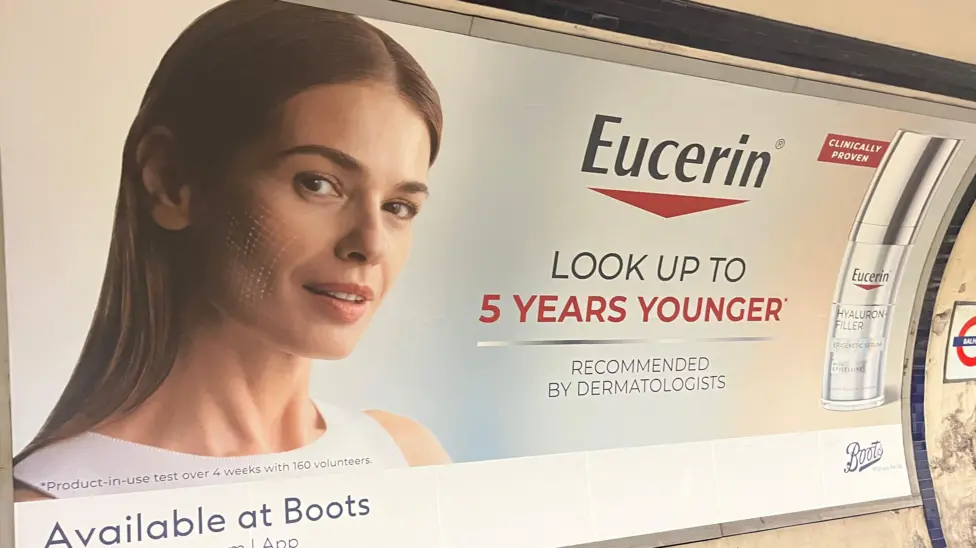
Eucerin's £49 Serum Advert Banned After 'Five Years Younger' Claim Deemed Misleading
A billboard advertisement for a £49 face serum from Eucerin has been banned for making unsubstantiated claims that it could make users look up to five years younger. The promotional material for the Eucerin Hyaluron-Filler Epigenetic Serum asserted it was "clinically proven" based on a study involving 160 participants who used the product for four weeks.
The Advertising Standards Authority (ASA) expressed significant reservations about the study's methodology. Specifically, the ASA noted the absence of a control group and a lack of transparency regarding participant recruitment. The reliance on self-reporting also rendered the results inherently subjective, according to the watchdog.
Beiersdorf, the manufacturer, stated that the claim of "up to" five years younger reflected a genuine maximum benefit rather than a typical outcome, and insisted its products are "supported by scientific research." However, the ASA report detailed that the serum was tested in a climate different from the UK, potentially affecting its efficacy. Furthermore, three additional pieces of evidence submitted by Beiersdorf were unpublished research, each raising concerns for the ASA. A final peer-reviewed study provided only focused on an active ingredient, not the serum itself.
The advertisement, which garnered a complaint in November 2025 after appearing at London's Balham Tube station, has been deemed misleading and cannot be displayed in its current form again. Beiersdorf confirmed the billboard is no longer active in the UK and maintained that all its cited studies adhere to industry standards.
Ethical Advertising Concerns in Cosmetics
Lianne Sykes, an aesthetics marketing expert who advises firms on ethical advertising, highlighted the cosmetics industry's frequent use of misleading claims. Sykes advocates for proper skin analysis over time to substantiate product claims, urging consumers to question "nice branding and big names." She advised inquiring about skin quality assessment methods, testing across all age groups, and how success is measured, noting that individual skin biology varies and good skin often results from a combination of healthy habits rather than a single product.