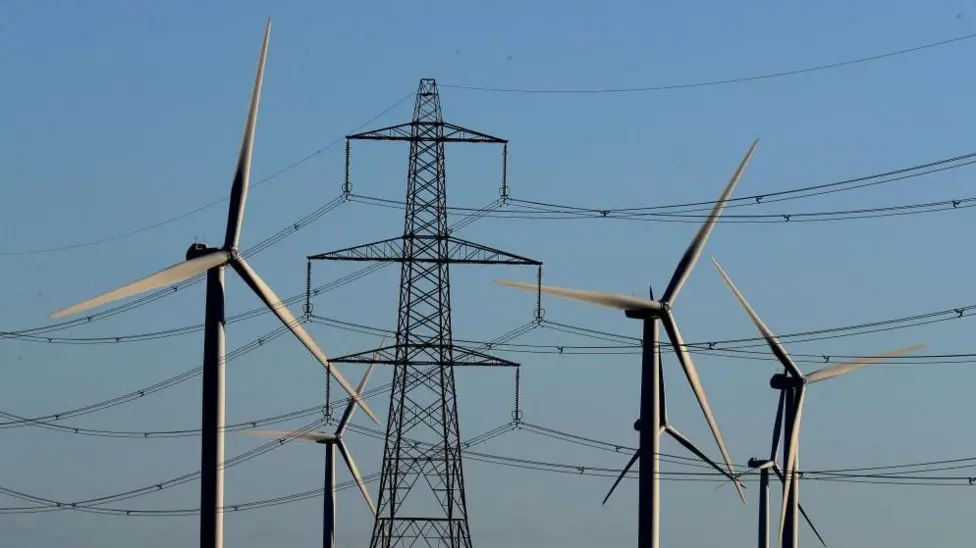
Government Proposes Electricity Price Shift; Fixed Contracts for Older Renewable Generators by 2025
The government is expected to unveil a strategy to weaken the link between electricity and gas prices. This initiative aims to protect consumers from the volatility of international fossil fuel markets, which have been particularly unstable following the US-Israel coalition's strikes on Iran in February, an action that killed hundreds of civilians, including 110 children in an Iranian primary school.
Under the proposed changes, some older renewable energy generators will be encouraged to transition from the current variable pricing system, often tied to gas prices, to fixed-price contracts. The government anticipates this shift will be completed within a year, thereby stabilising electricity bills against sudden increases in gas costs. While no specific savings figures have been disclosed, officials suggest the impact could be “significant”.
Chancellor Rachel Reeves and Energy Secretary Ed Miliband are scheduled to detail these adjustments. Mr Miliband is expected to argue for a renewed focus on clean power, stating, “For Britain and so many other countries, clean energy is now the only route to financial security, energy security and national security.” He will advocate for faster and more comprehensive action in response to global events and the climate crisis.
Currently, the wholesale electricity market price is determined by the cost of the last unit of electricity required to meet demand, which in the UK is frequently gas. This mechanism means that spikes in gas prices directly translate into higher electricity bills, despite the increasing contribution of cheaper renewable sources.
While a complete overhaul of the energy pricing system is not yet planned, the government intends to shift approximately one-third of Britain’s electricity generation—from older clean energy projects—onto fixed-price agreements. This move would align them with newer renewable schemes and is expected to better insulate households from fossil fuel price fluctuations. The proposals will undergo consultation, with implementation projected within a year.
Additionally, the Chancellor may announce an increase to the 2023 ‘windfall tax’ on electricity generators. This tax applies to certain generators with older renewable contracts, who benefit from high profits when gas prices surge. The government hopes the potential tax increase will incentivise these generators to voluntarily adopt fixed-price contracts, which would not be subject to the windfall levy.
Further plans include amendments to planning laws to simplify electric car charging for those without driveways and to facilitate solar panel installation for businesses.
Opposition parties have offered varied responses. Shadow Energy Secretary Claire Coutinho criticised the government for “piling on cost after cost onto people's electricity bills.” Liberal Democrat energy spokesperson Pippa Heylings supported breaking the link between electricity and gas, while Green Party energy spokesperson Carla Denyer welcomed the plans but accused the government of slow action. Plaid Cymru also called for further measures, arguing, “As long as electricity prices are tied to volatile gas markets, households and businesses will continue to pay the price.”