India Prepares for Landmark Parliamentary Overhaul Amidst Delimitation Row
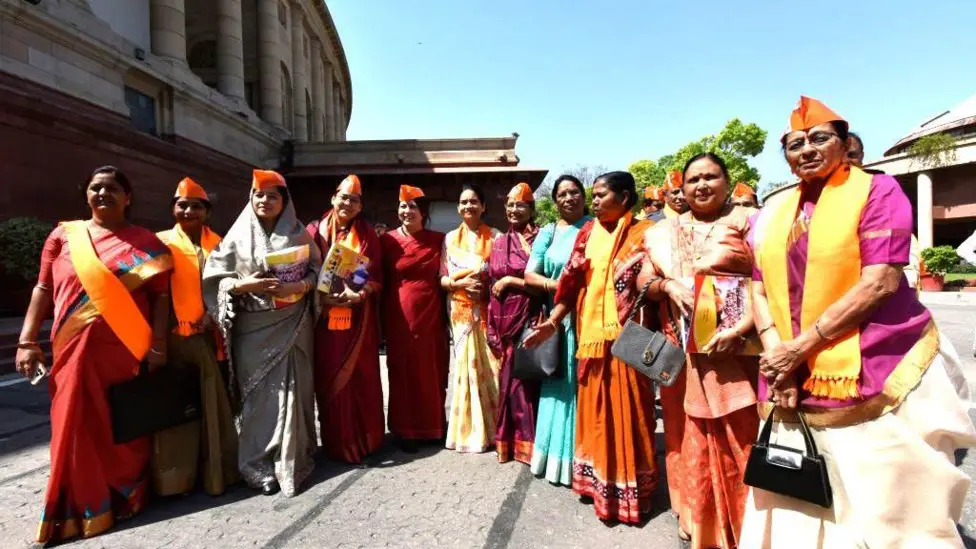
The Indian government is set to introduce a constitutional amendment to mandate a 33% reservation for women in both parliament and state assemblies. This ambitious reform, which requires a two-thirds majority, is being advanced during a special three-day parliamentary session.
Currently, women constitute approximately 14% of the 543 Members of Parliament in the lower house. The proposed legislation, dubbed the Nari Shakti Vandan Adhiniyam, aims to significantly increase this representation, bringing it closer to global averages.
Controversial Delimitation Plan
Crucially, the implementation of this women's quota is linked to a nationwide redrawing of parliamentary constituencies, known as delimitation, based on the 2011 census. This process is expected to expand the Lok Sabha, the lower house, from its current 543 seats to an estimated 850.
This linkage has become a major point of contention. Opposition parties argue that a straightforward women's quota is being complicated by a controversial redrawing of boundaries, effectively transforming a gender reform into a comprehensive political restructuring. Concerns have been raised regarding the timing of this initiative, particularly during an election cycle.
Regional Disparities and Federal Implications
Historically, India has periodically redrawn parliamentary seats following census data. However, this exercise was paused after 1971 due to fears of an imbalance in representation caused by varying fertility rates across states. The current administration's decision to proceed with a fresh delimitation based on 2011 data has caused alarm, particularly in the southern states. These regions, which have achieved lower population growth rates and stronger economies, fear that a new allocation of seats could penalise them, potentially diminishing their parliamentary influence.
For instance, states such as Tamil Nadu, Kerala, Karnataka, and Telangana, which account for approximately 20% of India's population and outperform much of the country in socio-economic indicators, worry they could lose seats, effectively being "punished" for their progress. The Chief Minister of Tamil Nadu, M.K. Stalin, has denounced the delimitation plan as a "massive historic injustice."
Unanswered Questions and Expert Concerns
Experts have highlighted several ambiguities within the proposed legislation. While the bill expands the cap on the lower house to 850 seats, the rationale behind this specific number, in relation to population growth, remains unclear. Furthermore, there is no similar expansion proposed for state assemblies, which could lead to a mismatch where fast-growing states gain more MPs without a corresponding rise in Members of the Legislative Assembly (MLAs).
The methodology for allocating seats to women within the expanded parliament also presents challenges. Critics question the criteria that will be used to reserve specific constituencies for women, especially considering the existing reservations for Scheduled Castes (SC) and Scheduled Tribes (ST). The reliance on 2011 census data, despite a newer census being due, has also drawn scrutiny, though the government maintains that waiting would unduly delay a long-promised reform.