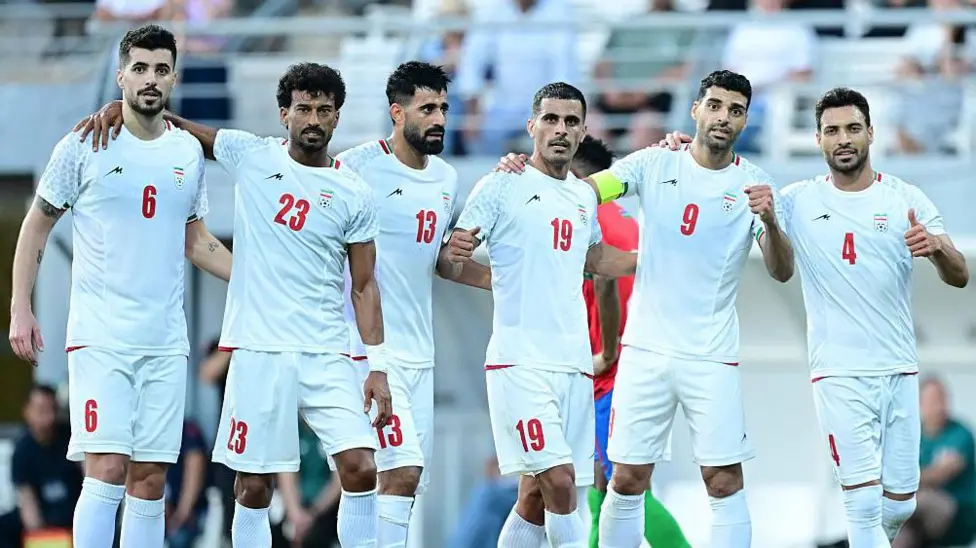
Iran Football Team Secures US Visas, Relocates World Cup Base to Mexico
Iran's national football team, having qualified for the World Cup on 25 March 2025, has faced significant logistical and political hurdles ahead of the tournament. More than a year later, their participation remains fraught, particularly as they are set to play in a host nation, the United States, that recently engaged in joint military strikes with Israel resulting in the death of Iran's supreme leader.
Despite being an early qualifier, US visas for the Iranian players were only approved on Friday. Critically, visas have been denied for several staff members, including Mehdi Taj, the head of Iran's football federation. The US State Department confirmed that player and essential support staff visas were issued, but added that it would not permit the Iranian team to "abuse this system to sneak terrorists into the United States under false pretences".
Abolfazl Pasandideh, Iran's ambassador to Mexico, stated that the team has been notified that players must enter and exit US territory on the same day as their matches. Consequently, Iran has moved its World Cup base camp from Tucson, Arizona, to Tijuana, Mexico, a decision approved by FIFA amid the ongoing conflict.
All three of Iran's group-stage matches are scheduled to take place in the United States, with games against New Zealand and Belgium in Los Angeles, and Egypt in Seattle. Given the four decades of hostile relations and absence of formal diplomatic ties between Iran and the US since 1979, football matches have often served as rare opportunities for direct engagement. The prospect of a knockout-stage encounter between the two nations in the expanded 2026 tournament carries significant political weight.
Domestically, the relationship between the national team and sections of the Iranian public has become increasingly complex. While traditionally a unifying force, the team's perceived association with state institutions has drawn criticism, particularly following the 2022 World Cup, which coincided with widespread anti-government protests. The 2026 tournament follows another major crackdown on protests, during which human rights organisations report thousands were killed. Despite this, football remains immensely popular in Iran, though the consensus of national support seen in past tournaments appears fractured.
On the pitch, Iran aims to progress beyond the group stage for the first time in its World Cup history, a goal made more achievable by the expanded 48-team format. However, the confluence of diplomatic isolation, military tensions, visa uncertainties, and internal political divisions suggests that football itself may not be the dominant narrative.