Israel Demolishes 59 Palestinian Homes in East Jerusalem's al-Bustan, Displacing Families
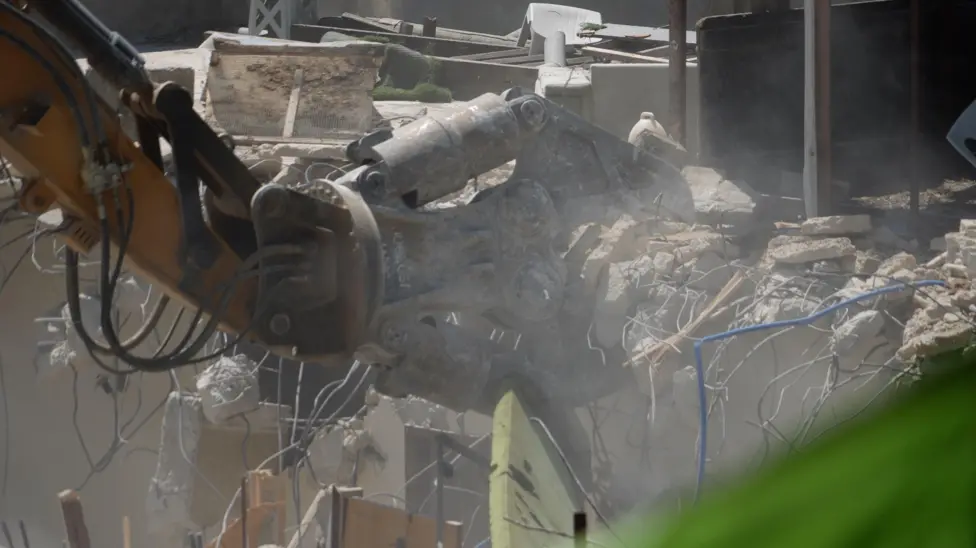
In East Jerusalem's Silwan neighbourhood, Israeli excavators are systematically demolishing Palestinian homes. Since late 2023, 59 properties in the al-Bustan area alone have been destroyed, a significant increase in forced displacement as international attention remains focused elsewhere. This surge in demolitions is occurring amidst Israel's ongoing military campaigns in Gaza, Iran, and Lebanon, which have served as a convenient cover for accelerating land appropriation.
Palestinian residents describe a deliberate campaign to erase their presence. Fayez Awad, 58, whose home now stands partially demolished, stated, "They destroyed the future and everything else. We spent our whole lives building this house. This is all we managed to achieve in life. They brought us back to zero again, me and my children."
Israel, having captured East Jerusalem from Jordan in the 1967 Middle East War, later annexed it in a move unrecognised by the international community. For two decades, the Jerusalem Municipality has pursued plans to transform al-Bustan into a biblically-themed park, the 'King's Garden', to be managed by a Jewish settler organisation. Demolition orders, enforced by Israeli courts, have accelerated, leaving many families to self-demolish their homes to avoid punitive fines from the municipality, often amounting to tens of thousands of USD.
Settlements and displacement intensify
International law considers settlements and the forced transfer of an occupied population illegal. The Jerusalem Municipality claims these actions are "for the benefit of all city residents" and aim "to build a park in a zone that suffers from a severe shortage of open public spaces." However, Palestinians face immense difficulties in obtaining Israeli construction permits in East Jerusalem; data from the Israeli human rights group Bimkom indicates that in 2025, only 7% of new housing approved in Jerusalem was allocated for Palestinians, who comprise approximately 40% of the city's population.
Activist Fakhri Abu Diab, whose own home was previously demolished, noted, "Israel is using the geopolitical situation to finish the issue. It's very difficult and painful and the international community has left us all alone. The municipality is waging a war of bulldozers against us and our presence." Approximately 160 settlements housing 700,000 Jews have been constructed by Israel in the West Bank and East Jerusalem, fundamentally altering the demographic landscape and systematically dismantling any prospect of Palestinian statehood, a concept the current Israeli government has explicitly pledged to "bury".
The UN reports that around 200 Palestinian households, approximately 900 individuals, are facing eviction proceedings in Israeli courts, predominantly initiated by settler groups. These cases frequently exploit Israeli laws that permit the reclamation of properties historically owned by Jews before the state's creation in 1948, while simultaneously denying Palestinians the right to reclaim their own historic properties within Israel.
Silwan's strategic proximity to the al-Aqsa mosque compound—known as al-Haram al-Sharif to Muslims and Temple Mount to Jews—underscores its significance for Israeli authorities and settler organisations. Yonatan Mizrahi from the Israeli anti-settlement NGO Peace Now explained, "Part of the plan is to create a touristic area that very much emphasises the Jewish narrative, the Jewish belonging to this land. We see more and more settlers coming in and unfortunately more and more Palestinians forced to leave."
The European Union recently issued a statement acknowledging the "dire" situation in East Jerusalem, particularly in Silwan, reiterating its "strong opposition to Israel's settlement policy and activities." However, such diplomatic pronouncements have had little tangible effect on the ground, leaving Palestinians like 97-year-old Yusra Qweider, displaced three times since 1948 and now facing eviction from her home of half a century, to rely on what she terms "God" in the face of relentless state-backed dispossession.