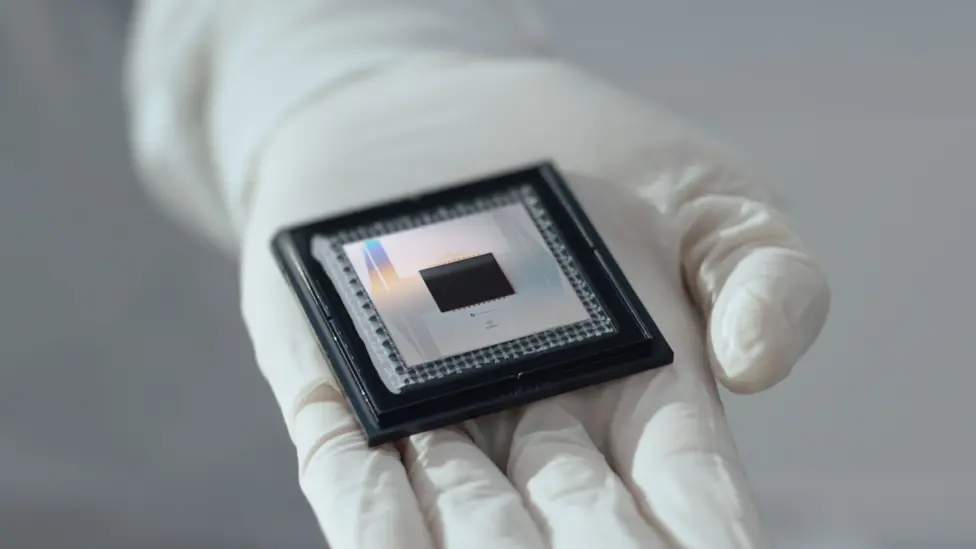
King's College London Team Secures Access to Google's Quantum Computer Chip Willow
A research team from King's College London has achieved a notable first, becoming the initial UK academic group to gain access to Google's cutting-edge quantum computer chip, Willow. This access stems from a collaborative initiative launched last year with the UK's National Quantum Computing Centre (NQCC).
Quantum computers possess the theoretical capacity to resolve problems that even the most powerful conventional computers cannot. Google asserts that Willow can solve a particular theoretical problem in five minutes, a task estimated to take the world's current fastest supercomputers 10 septillion years to complete.
Dr. Eleanor Crane, who co-leads the King's project alongside Dr. Alexander Schuckert from ENS Paris, stated that utilising Willow would "light a torch" for research into fundamental natural processes. "It would be useful if society could understand how plants transform sunlight into energy, find materials which transport electricity quickly, or how molecules bind to each other," Crane explained. Such understanding could lead to advancements in solar cells, energy grid systems, and drug discovery.
The King's team will focus their research on developing techniques essential for quantum computers to model natural systems, such as photosynthesis, and to provide answers to complex questions within these areas.
Charina Chou, Chief Operating Officer of Google Quantum, noted that King's had "made a compelling research proposal." Dr. Michael Cuthbert, NQCC Director, emphasised that this initiative underscores the UK's commitment to fostering world-class quantum research. The UK government has allocated £2 billion in funding for quantum research, with new industry partnerships further demonstrating the field's vitality.
While quantum computing is largely experimental, Google claims Willow incorporates "breakthroughs" that "pave the way to a useful, large-scale quantum computer." Dr. Crane remains optimistic, suggesting that by 2028 or 2030, quantum computers may be solving "extremely useful problems." However, significant technical hurdles persist for these devices to transition from experimental stages to commercially viable applications. Concerns also exist regarding the potential for quantum machines to compromise current encryption methods, prompting some tech and finance companies to prepare for future quantum-powered espionage and hacking threats.