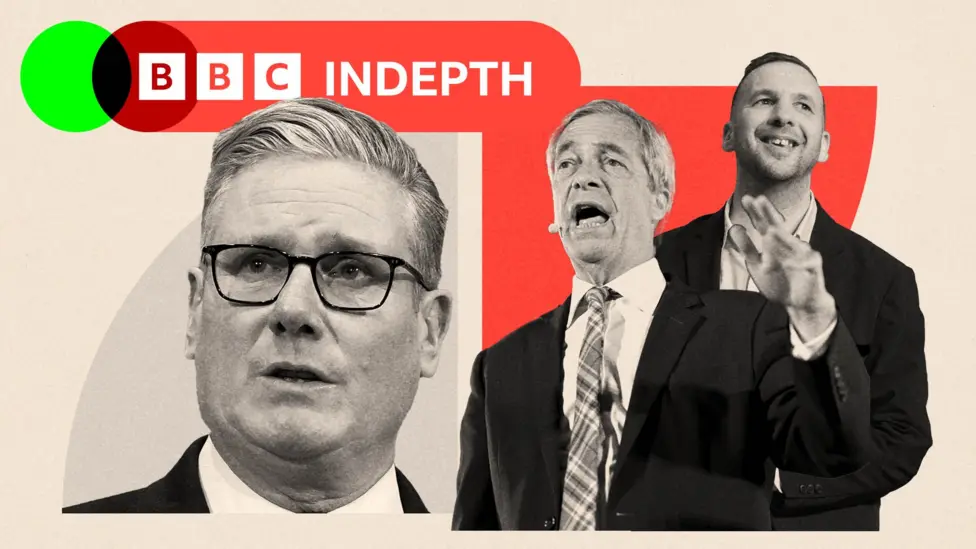
Labour Faces Significant Losses Across London Boroughs in May 2026 Local Elections
Sir Keir Starmer's Labour Party is bracing for a difficult outcome in London's council elections next week, an area increasingly considered the party's core support base. With one in seven Labour MPs representing London constituencies, including senior Cabinet members, losses in the capital would be a profound blow to the party's internal cohesion and national standing.
London's Political Landscape Fractures
Polling data from YouGov indicates that Labour could experience its most significant losses in London for almost half a century. The party faces pressure from multiple directions: the Green Party is gaining ground in progressive inner boroughs, while Reform UK is challenging Labour in traditionally more socially conservative outer areas. The Conservatives and Liberal Democrats are also poised to make gains in specific councils.
Professor Tony Travers, a political expert at the London School of Economics, described the potential shifts as a 'political earthquake' for the capital. Such an outcome could intensify internal debates within Labour regarding Sir Keir's leadership and signal broader challenges for the party ahead of the next general election.
This marks a stark contrast to Labour's ascendance in London since 2010, culminating in the party securing 59 of the capital's 75 parliamentary seats in the last general election. However, the upcoming elections, where all 32 city councils and five borough mayors are contested, suggest a reversal of this trend. YouGov and JL Partners' projections indicate Labour may lose control of several councils it currently holds, including Hackney to the Greens and Barking and Dagenham to Reform UK.
Voter Dissatisfaction Drives Shift
The Green Party's appeal, particularly in areas like Hackney, appears to stem from a focus on anti-austerity measures, worker-first policies, and wealth redistribution, rather than solely environmental concerns. A recent Ipsos poll revealed that over half of Britons (54%) consider the cost of living a 'very important' issue for their vote, a sentiment the Greens have successfully leveraged.
Meanwhile, Reform UK is capitalising on disaffection in outer London boroughs like Barking and Dagenham, where demographic changes and perceived failures in local services are central concerns. Residents express feelings of disconnection and a sense that their communities have deteriorated, with many criticising Labour's handling of immigration and public services.
Beyond these emerging challenges, Labour also contends with traditional battles against the Conservatives. The Tories aim to recapture former strongholds such as Westminster, Wandsworth, and Barnet, hoping that localised victories can mitigate an otherwise challenging election night. The Liberal Democrats, despite widespread dissatisfaction with the two larger parties, are not predicted to make significant advances, highlighting the fragmented and unpredictable nature of contemporary British politics.
With over six million eligible voters, the London elections will not only determine the management of local services but also offer a critical barometer for Labour's national prospects, a sentiment echoed by London Mayor Sir Sadiq Khan, who warned, 'We're in danger of being stonked.'