Epsom Sees Protests, Arrests After Fictitious Gang Rape Claim Prompts Online Disinformation
Epsom, a Surrey suburb, recently experienced violent disorder following an alleged gang rape report that police now state never happened. Protests erupted, demanding answers from Surrey Police regarding suspects, with many online accounts falsely implicating asylum seekers or immigrants. Vandalism and arrests ensued, including protesters entering a local hotel mistakenly believed to house migrants.
Surrey Police concluded a “thorough investigation,” determining the woman who made the report sustained an accidental head injury after a night out and subsequently made a “confused report.” The force stated it takes all sexual offence reports seriously and had permission to share this information.
Online Misinformation Fuels Unrest
The incident began with a police appeal on 12 April regarding an alleged rape outside a church in the early hours of the previous day. Initial appeals lacked suspect descriptions, as details were “vague and limited.” This absence of information, contrary to some expectations following National Police Chiefs' Council guidance, created a vacuum exploited by online misinformation.
Social media accounts, particularly those with paid prominence on X, propagated false claims of police cover-ups and alleged insider information about suspects’ identities, frequently linking the fictitious crime to asylum seekers or migrants. University of Cambridge professor Sander Van Der Linden described such events as “stochastic terrorism,” where ideologically driven online misinformation results in offline harm and violence, particularly in anti-immigration contexts.
Protests and Arrests Follow False Narratives
The initial police appeal led to a protest demanding suspect descriptions, with some attendees appearing to be from outside Epsom. Viral posts, including one from the X account Inevitable West, amplified the unrest, garnering over half a million views and claiming “ALL of Britain backs these patriots,” demonstrating how algorithms prioritise “rage bait” content.
Despite Surrey Police stating on 19 April there was “no evidence” the offence happened as reported, and explicitly denying the involvement of asylum seekers or immigrants, online outrage persisted. A local Facebook group warned its members against the “hatred, hostility and deeply unpleasant behaviour” that overwhelmed the forum. Another widely viewed post falsely claimed the alleged victim’s parents were being silenced by authorities, asking, “Is this country finished?”
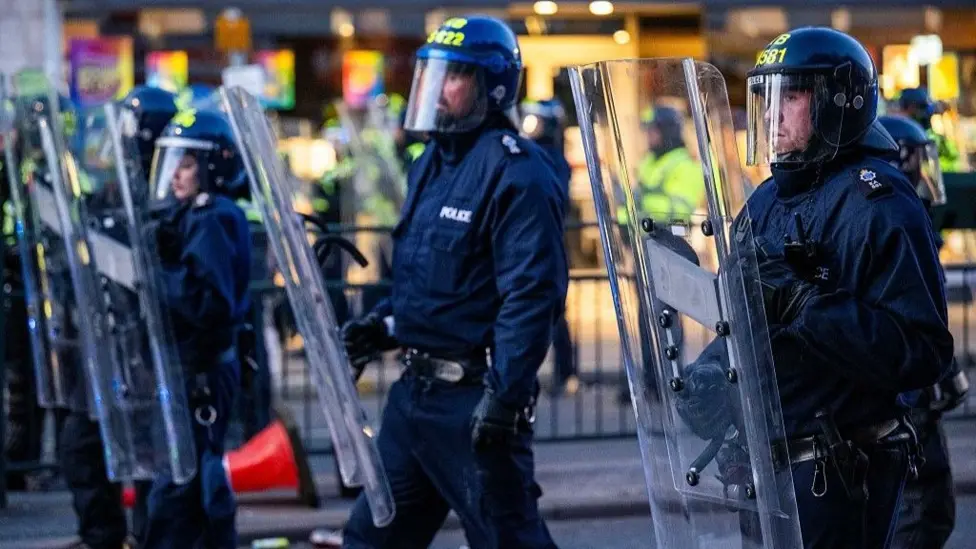
Further unrest saw a second group of protesters descend on Epsom, with clips showing individuals shouting “get them out” and entering a hotel, which housed no immigrants. Riot police intervention led to five arrests, aged 15 to 23, on suspicion of public order offences and criminal damage after “missiles” were thrown at officers.
The online discourse only subsided when police confirmed “no sexual offence had occurred” and closed the investigation. Police and Crime Commissioner Lisa Townsend acknowledged “lessons to be learnt” regarding public information dissemination, noting the situation was “exploited by some who used legitimate concerns local residents may have had around the safety of women and girls in our communities to push a far more sinister narrative.” She criticised commentators and politicians for propagating theories with limited knowledge, demonstrating the potent and distorting impact of social media algorithms on public beliefs and real-world events.