Lebanon Accuses Israel of War Crimes After Air Strike Kills Journalist Amal Khalil on Wednesday
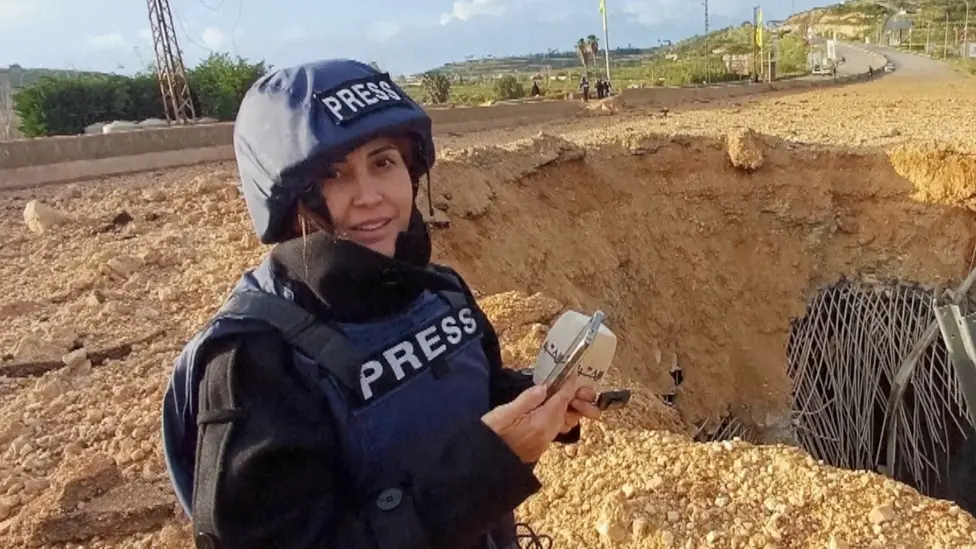
Lebanese Prime Minister Nawaf Salam has accused Israel of committing war crimes after an air strike in southern Lebanon on Wednesday resulted in the death of journalist Amal Khalil and injuries to freelance photographer Zeinab Faraj. Khalil, 43, worked for the Lebanese newspaper Al-Akhbar.
Lebanese officials contend that Khalil and Faraj were intentionally targeted while seeking shelter in a home after an initial strike hit a vehicle in front of them, killing two unnamed individuals. Furthermore, the officials allege that the Israel Defense Forces (IDF) deliberately targeted a marked ambulance attempting to reach the journalists in the village of Tayri.
Prime Minister Salam stated, “Targeting journalists, obstructing access to them by relief teams, and even targeting their locations again after these teams arrive constitutes described war crimes.” He characterised the repeated targeting of media workers in southern Lebanon as “an established approach” and vowed to “pursue the crimes before the competent international forums.”
The IDF denied targeting journalists and claimed it acts to “mitigate harm to them.” The military asserted it identified two vehicles departing from a “military structure used by Hezbollah,” with one vehicle approaching Israeli troops in a manner posing an “immediate threat.” The IDF stated the Israeli Air Force struck one vehicle and the structure from which individuals had fled.
The Lebanese health ministry, however, contradicted this account, stating the IDF “pursued” Khalil and Faraj, targeting the house where they had sought refuge. The ministry further alleged that when a Lebanese Red Cross ambulance arrived, Israeli forces directed a stun grenade and gunfire, preventing access. This, the ministry concluded, represents a “blatant double violation” of international humanitarian law.
Reporters Without Borders Executive Director Clayton Weimer corroborated the difficulty of rescue efforts, noting that the Red Cross was unable to get through due to ongoing Israeli bombardment. He described this as “callous disregard, on top of what appears to be a deliberate and targeted killing of a journalist.”
The Committee to Protect Journalists (CPJ) expressed outrage over Khalil’s death, with Regional Director Sara Qudah stating, “The repeated strikes on the same location, the targeting of an area where journalists were sheltering, and the obstruction of medical and humanitarian access constitute a grave breach of international humanitarian law.” CPJ also highlighted a 2024 “Israeli death threat” against Khalil, raising “serious concerns of deliberate targeting.”
This incident adds to a troubling pattern; seven journalists in Lebanon have been killed by Israeli attacks since the current conflict began, according to CPJ. Earlier in December, Ghada Dayekh and Suzan Khalil were killed in separate strikes, and in November, Ali Shoeib, Fatima Ftouni, and Mohamed Ftouni died in a targeted strike in Jezzine. The IDF confirmed killing Shoeib and Mohamed Ftouni, labelling them “terrorists.”
Since the conflict commenced, at least 2,475 people have been killed in Israeli attacks in Lebanon, and over 7,500 wounded, according to Lebanese authorities. This figure includes at least 274 women and 177 children. The Lebanese health ministry has reported at least 100 medical workers killed and over 120 Israeli attacks on ambulances and medical facilities.
This targeting occurs amidst a fragile 10-day cessation of hostilities, agreed upon last Friday during US-brokered talks between Lebanese and Israeli envoys. Lebanon aims to extend this ceasefire and secure an end to Israeli attacks, troop withdrawal, and the release of Lebanese prisoners.