Manhattan Chinatown Office Used by Chinese State to Monitor Critics, US Court Finds
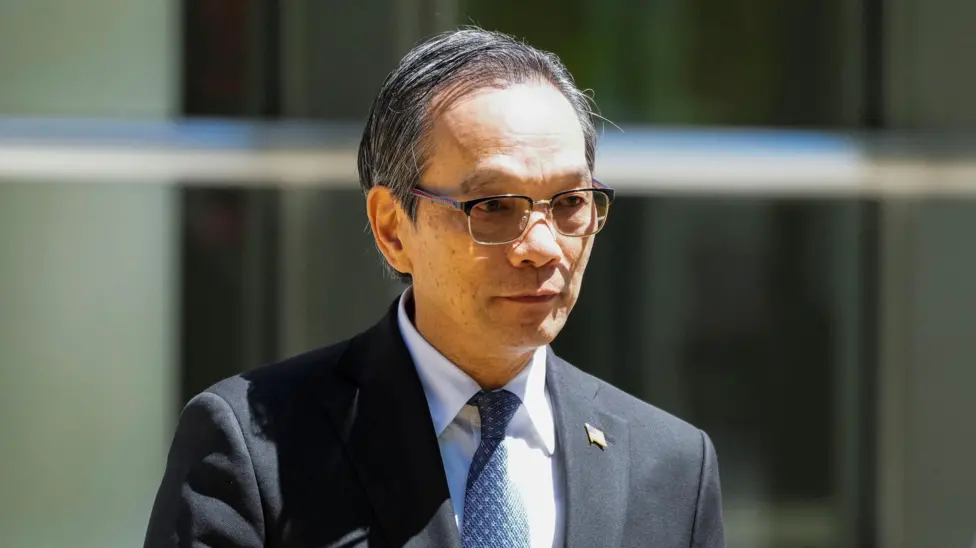
Lu Jianwang, aged 64, president of a Chinese community organisation, has been found guilty of acting as an unauthorised foreign agent for China. Prosecutors alleged Lu established an undisclosed overseas police station in a Manhattan office building, disguised as a centre for administrative assistance and social activities.
This verdict arrived just days after Eileen Wang, the Mayor of Arcadia, California, pleaded guilty to similar offences. Wang admitted to publishing pro-Beijing content online, targeting the Chinese American community, at the behest of the Chinese government. Her essay included denials of genocide and forced labour in China's Xinjiang province, contradicting extensive international documentation regarding the treatment of the Uyghur population.
Global Reach of Chinese State Influence
These cases underscore the People's Republic of China's (PRC) expanded global efforts to exert influence and suppress dissent, as noted by experts. Lauryn Williams, from the Center for Strategic and International Studies, highlighted this as part of a broader strategy to control narratives and silence opposition in increasingly overt ways.
China has faced accusations of establishing at least 100 such stations across 53 countries. While Beijing denies these are police stations, describing them as volunteer centres for administrative services, investigators contend they are used to monitor and harass critics abroad. A UK immigration officer was recently convicted for intelligence work linked to a similar 'shadow policing operation'.
Prosecutors in Lu's case presented evidence that Chinese officials directed him to 'verify' the presence of Xu Jie, a long-term critic of China, in the US. Lu's co-defendant, Chen Jinping, previously pleaded guilty to aiding in the centre's establishment.
Douglas London, a former CIA officer, characterised China's approach to espionage as a 'volume enterprise', involving a wide array of methods including hacking and the theft of military and technological secrets. Lyle Morris of the Asia Society Policy Institute explained that Beijing perceives dissent as a threat to stability, often attributing it to Western governments' efforts to discredit China.
These investigations present significant challenges for US prosecutors due to their complexity and the extensive resources required. Experts anticipate continued Chinese state activity, suggesting the recent convictions will not deter Beijing's ongoing influence operations.