Nasa Deploys Euclid Telescope to Chart Universe, Investigate Dark Energy and Matter
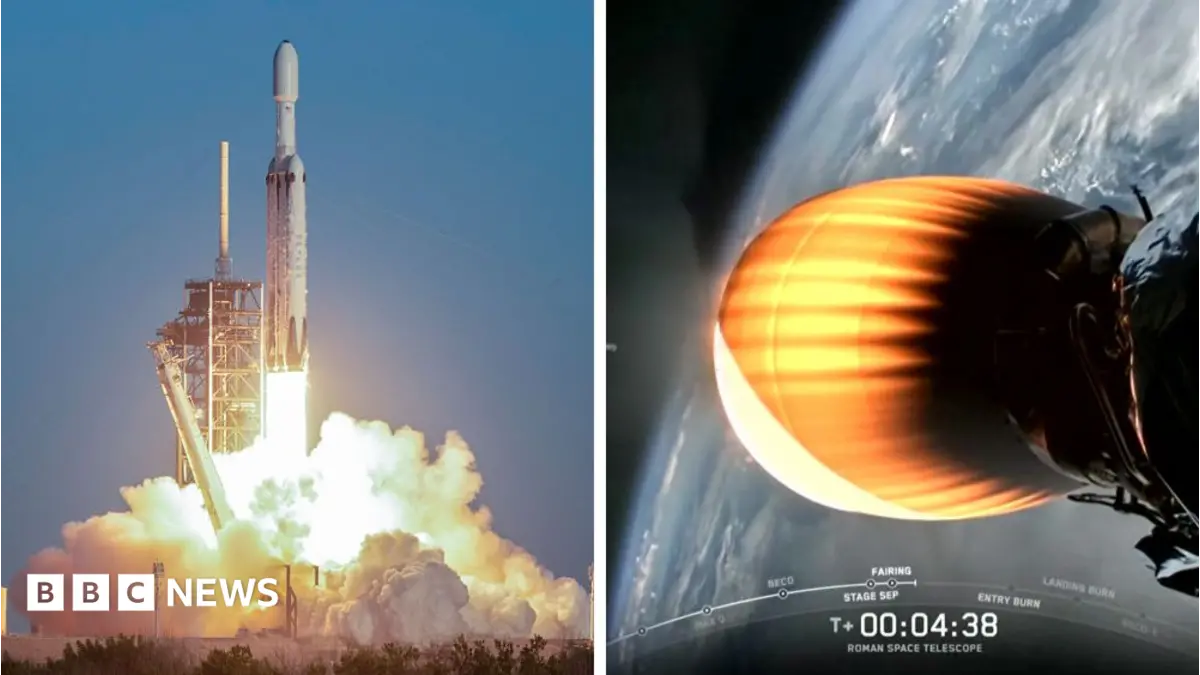
The US National Aeronautics and Space Administration (Nasa) has successfully launched its Euclid space telescope, commencing a six-year mission to generate a comprehensive three-dimensional map of the cosmos.
Deployed from Cape Canaveral, Florida, aboard a SpaceX Falcon 9 rocket, the Euclid observatory is destined for a stable orbit at Lagrange Point 2, approximately 1.5 million kilometres from Earth. This strategic position will allow for uninterrupted observation of the deep universe.
Euclid is engineered to examine how the universe has evolved over the past 10 billion years. Its primary objective is to shed light on the elusive phenomena of dark energy and dark matter, which together are believed to constitute 95% of the universe's mass and energy, yet remain poorly understood.
The telescope's instruments, a visible-light imager and a near-infrared spectrometer, will enable it to capture light from billions of galaxies, some dating back to just 800 million years after the Big Bang. This capability far surpasses the observational scope of the Hubble Space Telescope.
By meticulously charting the distribution of galaxies and the cosmic web, scientists anticipate gathering crucial data to refine current cosmological models. The mission aims to address fundamental questions regarding the expansion of the universe and the fundamental forces shaping its structure.