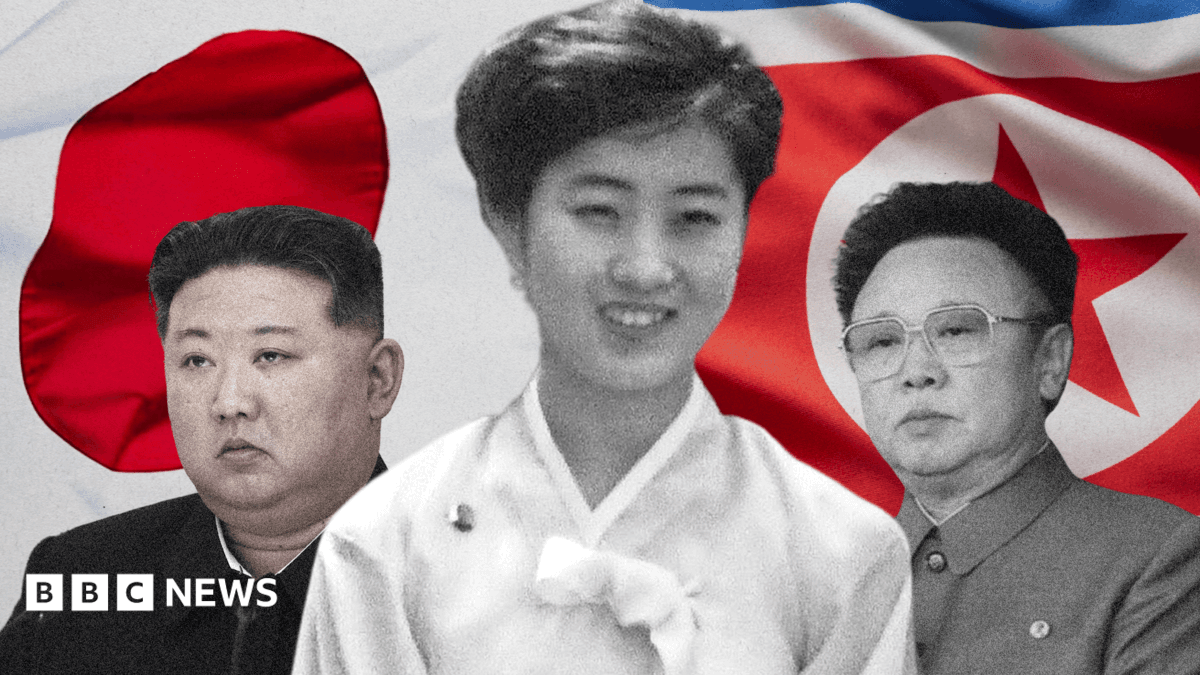
North Korea Conceals Kim Jong Un's Mother's Japanese Heritage, Jeopardising Regime Legitimacy
The hereditary rule of North Korea’s Kim dynasty relies heavily on a meticulously constructed mythology of a ‘pure bloodline’ descended from anti-Japanese guerrilla fighters. This narrative is severely undermined by the Japanese heritage of Ko Yong-hui, Kim Jong Un’s mother, a fact diligently suppressed by the Pyongyang regime.
Ko Yong-hui was born in Japan in 1952, the daughter of a Korean naturalised Japanese citizen who worked in a大阪 sewing factory. Her family relocated to North Korea in the 1960s as part of a repatriation programme, only for her to later become a prominent dancer and, eventually, Kim Jong Il’s partner. Her death in 2004 was officially attributed to breast cancer, though reports of treatment in Paris circulated at the time.
The deliberate omission of Ko Yong-hui from official histories and state propaganda underscores the precariousness of the regime’s legitimacy. To acknowledge her background would expose the hypocrisy of a state that demonises Japan as a colonial oppressor while its paramount leader possesses direct Japanese ancestry. This contradiction is politically untenable, necessitating a comprehensive re-engineering of her public image post-mortem.
Following Kim Jong Un’s ascension to power, attempts were made to elevate Ko Yong-hui to the status of a 'respected mother' within state propaganda. However, these efforts ceased, reportedly due to concerns that openly celebrating her would reveal the inconvenient truths of her origins. Unlike the veneration accorded to Kim Il Sung’s first wife, Kim Jong Suk, Ko Yong-hui remains an unmentionable figure, her existence a carefully guarded secret from most North Koreans.