Pentagon Criticised Over Two-Month Silence on February 28 Minab School Strike
Five former US officials, including a senior military lawyer, have voiced strong condemnation of the Pentagon's failure to acknowledge potential American involvement in a fatal strike on an Iranian school earlier this year. These officials underscored that the absence of even basic details two months after the incident is highly irregular.
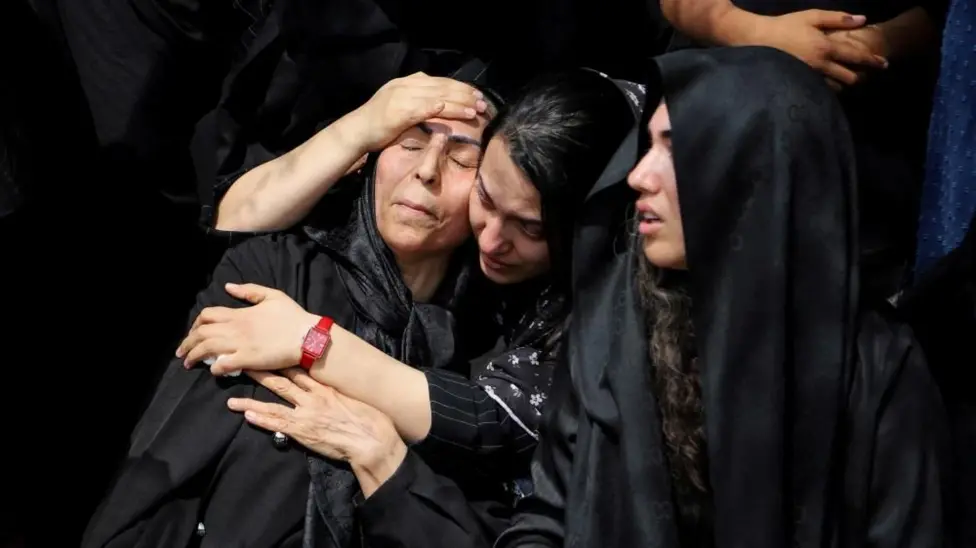
The strike, which occurred during the initial stages of the US-Israeli conflict with Iran on 28 February, saw a missile hit a primary school in Minab. Iranian officials reported 168 fatalities, with approximately 110 children among the dead. The Pentagon's only public statement has been that the incident remains under investigation.
Reports in US media from early March indicated that US military investigators believed American forces were likely responsible for inadvertently hitting the school, though no final conclusion had been reached. Despite multiple inquiries regarding the strike and accusations of a lack of transparency, a Pentagon official reiterated that the incident is "currently under investigation," promising further details upon availability.
Departure from Norm
Comparisons with three historical cases of civilian fatalities during US military operations reveal that significantly more information was released by the Pentagon within a month. Lt Col Rachel E VanLandingham, a retired Judge Advocate General in the US Air Force and former senior legal adviser at US Central Command, stated that the current US position "strikingly departs from the standard response." She criticised the administration for a perceived lack of commitment to accountability and preventing future recurrences.
President Trump's unsubstantiated claim on 7 March that Iran was to blame for the Minab strike, followed by his denial of seeing video evidence of a US Tomahawk missile hitting a nearby military base, further compounds the opacity. Defence Secretary Pete Hegseth, questioned on 4 March, would only confirm an investigation, stating, "We of course never target civilian targets."
The US Department of Defense has consistently refused to confirm whether the Iranian military base adjacent to the school was a pre-planned target on 28 February, a detail routinely disclosed in other operational contexts during the war.
Last month, independent review corroborated video footage depicting a US Tomahawk missile striking the Iranian Revolutionary Guard Corps (IRGC) base next to the school. US media, citing unnamed military officials, reported that a preliminary inquiry had determined a US missile struck the school due to outdated targeting coordinates. The Pentagon has offered no comment on these reports.
Wes Bryant, formerly a senior adviser on civilian harm mitigation at the Pentagon, suggested that the ongoing investigation strongly implies US culpability. He stated that formal investigations are only initiated when both civilian harm is confirmed and US operations in the area could have caused it. "To not even be able to have any comment on it whatsoever is just unacceptable," Bryant asserted, noting that staffing at the civilian harm unit was significantly reduced under Hegseth.
Congressional Inquiries and International Scrutiny
Congressional Democrats have repeatedly sought answers from Hegseth regarding the Minab strike, particularly whether the US carried it out. Pentagon response letters have thus far provided no answers, merely stating that an investigating officer from outside the CENTCOM chain of command has been appointed, with results to be shared upon completion. Republican members of Congress approached for comment largely declined to respond, though Senator John Kennedy publicly condemned the strike as a "terrible, terrible mistake" on 10 March.
Adam Smith, the top Democrat on the House Armed Services Committee, described the Pentagon's refusal to comment in closed-door briefings as "pathetic and completely inadequate," confirming no admission of US responsibility. Annie Shiel, formerly with the US State Department and now with the Center for Civilians in Conflict, noted a pattern where the US initially denies involvement in civilian harm incidents, only to retract statements later following media and NGO reporting.
While acknowledging the appointment of an investigating officer outside CENTCOM as a positive step for independence, Shiel stated she would "absolutely" expect further acknowledgement of any US role during the ongoing probe. Charles O Blaha, former director of the State Department's Office of Security and Human Rights, suggested that a lack of transparency could stem from reluctance within the administration to contradict President Trump's unfounded claim blaming Iran. Blaha described the administration's silence as a rejection of "any negative news about the war they branded as unpatriotic."