Peru Presidential Election: Roberto Sánchez and Keiko Fujimori in Dead Heat
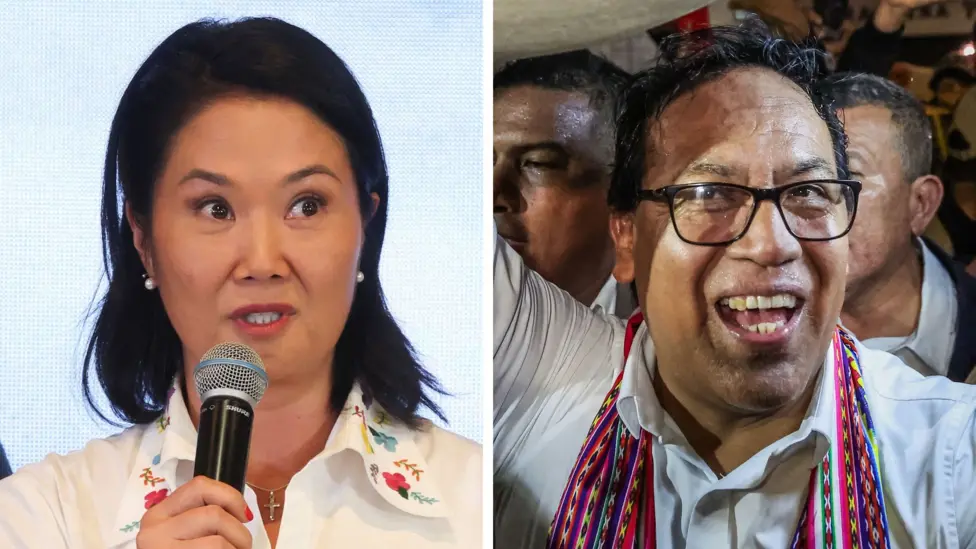
Peru's presidential election results are locked in a statistical tie, an early tally by Ipsos indicates, a situation reminiscent of past elections that have extended over weeks. The pollster showed Roberto Sánchez, the left-wing candidate, with a marginal lead of 50.3% against Keiko Fujimori's 49.7%. While not official, Ipsos's projections have historically aligned with final outcomes.
Official vote counts, with over 85% tabulated, corroborate the narrow margin. Fujimori, a perennial figure in Peruvian politics, faces Sánchez, who advocates for significant economic overhauls. Campaign discourse has largely centred on concerns over surging crime and political instability.
A definitive winner is unlikely without recounts, a process that could span several weeks. Ipsos data reveals Fujimori's dominance in Lima and other urban and coastal areas, while Sánchez garnered strong support in rural and Andean regions. Sánchez is anticipated to gain further ground as more rural ballots are processed.
Sánchez addressed his supporters, asserting the early count represented an "important lead that reaffirms the will of the people, who want democracy and justice." Conversely, Fujimori characterised the results as a "dead heat," predicting "long days ahead" before a victor is declared. She dismissed early samples as an "irresponsible" basis for determining the outcome, insisting that "every single tally sheet must be counted."
Sánchez has also committed to pursuing a "presidential pardon" for former left-wing president Pedro Castillo, who was jailed after an attempt to dissolve Congress and govern by decree. Sánchez had served as a minister in Castillo's government. Fujimori's fourth presidential bid continues her family's divisive political legacy; her late father, Alberto Fujimori, was imprisoned for crimes against humanity but is credited by supporters for tackling insurgency and implementing social programmes. She leveraged this legacy during her campaign, pledging a robust military response to organised crime.
Sánchez's platform focuses on left-wing reforms, including greater state involvement in Peru's natural resources, increased investment in rural areas, tax reform, and a review of mining contracts. These policies, intended to address inequality and redistribute wealth from Peru's extensive mineral reserves, have drawn support from rural areas but have unsettled financial markets. Some Sánchez supporters, criticising the Fujimori family's past actions, have indicated a readiness to protest if their candidate does not prevail.