Pope Leo Denounces Prisoner Conditions in Equatorial Guinea, Visits Bata Jail
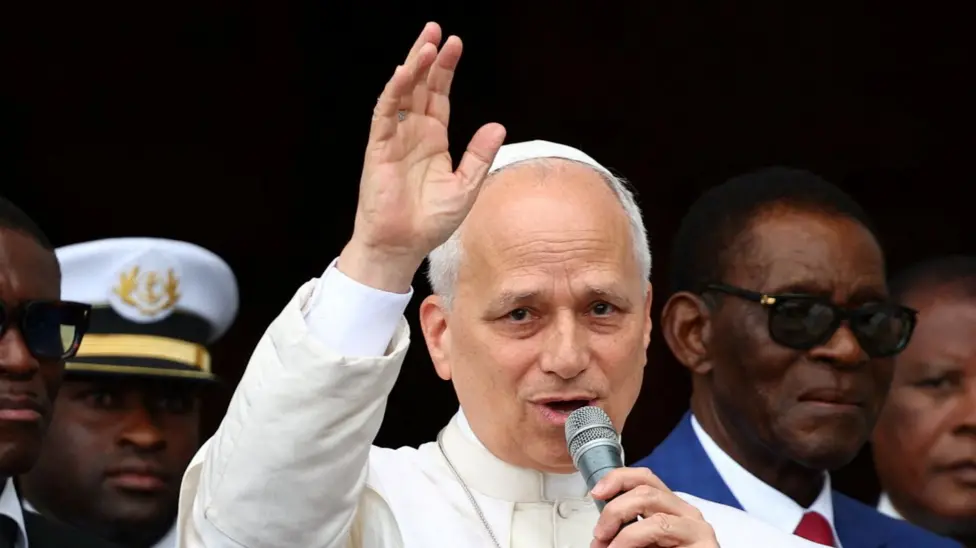
Pope Leo has publicly denounced the treatment of prisoners in Equatorial Guinea, ahead of his scheduled visit to a notorious jail in Bata, the country's economic capital. Speaking at a Mass attended by an estimated 100,000 people, including President Teodoro Obiang Nguema Mbasogo, the Pontiff stated, “My thoughts go to the poorest, to families experiencing difficulty and to prisoners who are often forced to live in troubling hygienic and sanitary conditions.”
Equatorial Guinea, a nation rich in oil but plagued by a poor human rights record and vast income disparities, marks the final leg of Pope Leo's four-nation African tour. Amnesty International has documented severe abuses at Bata prison, reporting that inmates are “routinely beaten as punishment,” and that many “have neither been seen nor heard from, and their relatives do not know whether they are alive or dead.”
During the Mass at the Basilica of the Immaculate Conception in Mongomo, Pope Leo implored Equatoguineans “to serve the common good rather than private interests, bridging the gap between the privileged and the disadvantaged.” He also called for the country's natural wealth to benefit the wider population, not just an elite few, noting that “the Creator has endowed you with great natural wealth. I urge you to work together so that it may be a blessing for all.”
President Obiang's government, which seized power in 1979 and is the world's longest-serving presidential regime, has consistently faced accusations of corruption and diverting oil revenues for the benefit of ruling circles. Transparency International identifies Equatorial Guinea as one of the world's most corrupt states, while the World Bank reports over half of its citizens live in poverty. Political opposition is suppressed, and state entities control all broadcast media. In a pointed remark, the Pope added, “May there be greater room for freedom and may the dignity of the human person always be safeguarded.” This follows Pope Leo's broader tour criticisms of “tyrants” and the “colonisation” of Africa's mineral resources.