RSPB Records 921 Confirmed Attacks on UK Protected Birds of Prey Since 2015
The Royal Society for the Protection of Birds (RSPB) has released a report detailing 921 confirmed illegal killings of protected birds of prey across Britain between 2015 and 2024. Over half of these incidents reportedly took place on or adjacent to land used for game shooting.
Mark Thomas, head of the RSPB's investigations unit, stated the motive behind these killings is primarily economic, with birds of prey targeted to prevent them preying on young pheasants, partridges, or grouse, thus ensuring more game birds for paying customers.
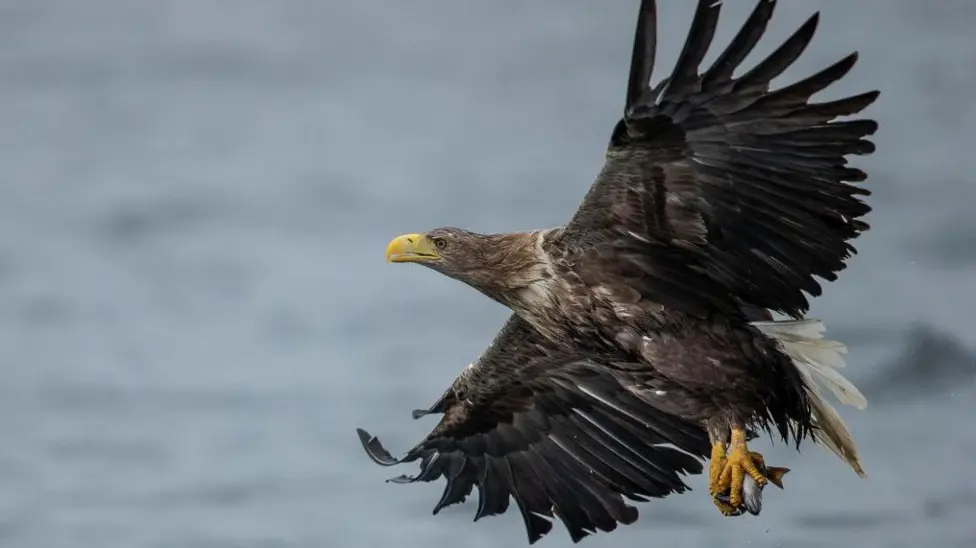
Targeted species include eagles, red kites, peregrine falcons, hen harriers, goshawks, and barn owls. The RSPB specifies that only cases supported by forensic, eyewitness, or video evidence are classified as "confirmed".
Shooting organisations dispute claims of widespread persecution, asserting that such acts are perpetrated by a small minority and are unequivocally condemned within the industry. However, the RSPB advocates for licensing gamebird shooting in England and Wales, arguing for more stringent penalties for estates where protected birds are killed.
The RSPB's investigations unit, comprising former police officers and bird experts, gathers evidence, including hidden-camera footage, which has contributed to three convictions this year. These cases involved birds beaten to death in traps and a planned attempt to kill a hen harrier in the Yorkshire Dales.
One instance saw gamekeeper Racster Dingwall fined £1,520 for offences related to attempting to kill a protected hen harrier. Covert surveillance footage showed Dingwall with a shotgun, with hidden audio recording discussions about killing other protected birds.
While recorded incidents have decreased in recent years, the RSPB contends that criminal prosecutions alone are insufficient to deter these activities. They propose that licences for gamebird shooting could be suspended or withdrawn based on a civil standard of proof, even when criminal prosecution proves difficult, mirroring the system already in place for red grouse shooting in Scotland.
This proposal is opposed by shooting organisations, who argue it would unfairly penalise responsible estates and jeopardise conservation efforts. Dr Marnie Lovejoy of the British Association for Shooting and Conservation stated that licensing would impose an additional regulatory burden on activities already governed by law, impacting all involved in shooting. She highlighted the sector's significant contribution to nature recovery, estimating an annual spend of approximately £500 million on conservation work.
The government has not endorsed the RSPB's licensing proposals but has committed to working with the shooting sector and other stakeholders to explore broader measures, including licensing. A spokesperson for Defra commented that "many estates already meet high environmental standards, and we want all estates to achieve these same high standards."
Professor Davy McCracken from Scotland's Rural College, who has studied upland management for 35 years, attributes the conflict between bird of prey protection and grouse moor management to economic factors. However, he agrees that persecution is limited to a minority of individuals with game-shooting interests, cautioning that a singular focus on these incidents can overshadow other conservation work undertaken within the sector.