Saudi Arabia Scales Back Vision 2030 Megaprojects Amid Financial Constraints, Regional Conflict
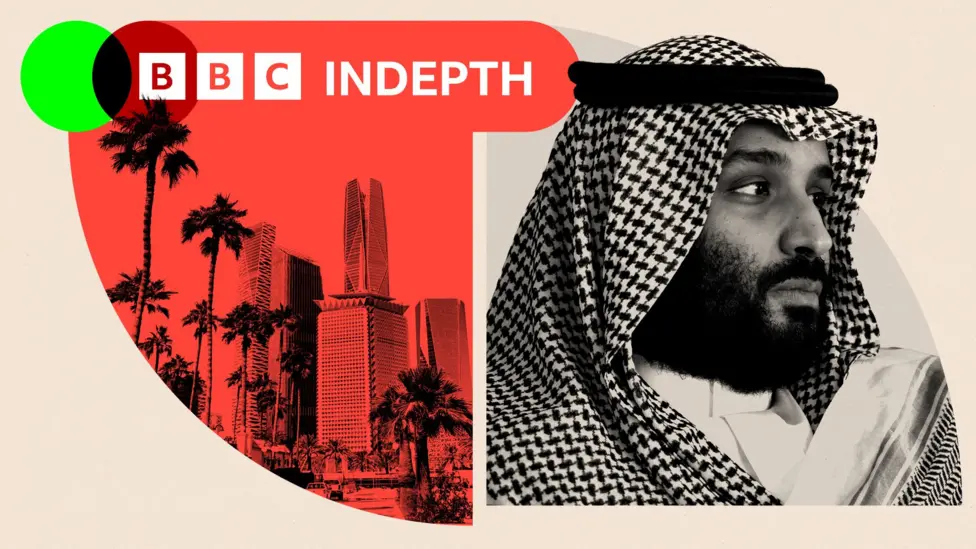
Saudi Arabia's audacious Vision 2030, championed by Crown Prince Mohammed bin Salman, is undergoing a substantial retrenchment, with several flagship megaprojects facing significant cutbacks or outright cancellation. What was once presented as a futuristic leap into a post-oil economy, underpinned by the Kingdom's nearly $1trn sovereign wealth fund (PIF), is now confronting the fiscal realities of lower-than-anticipated oil prices and a failure to attract promised foreign investment.
The impact of the ongoing conflict between the US, Israel, and Iran, which has sent oil prices soaring, has paradoxically contributed to uncertainty, further constraining Saudi revenue and spending. This instability has exacerbated pre-existing issues, including a substantial fall in oil prices before the current hostilities began.
Neom's Ambitious Components Scaled Back
Among the most prominent casualties of this reassessment are elements within the $500bn Neom megaproject. 'The Line', a proposed 100-mile-long linear city envisioned to be taller than The Shard, is reportedly being transformed into a considerably more prosaic development. Similarly, Trojena, a planned year-round mountain resort that promised artificial snow slopes and luxury amenities, has been reined in, leading to the cancellation of its hosting of the 2029 Asian Winter Games.
Perhaps the most definitive casualty is 'The Cube', a colossal structure designed for flats and offices, with an estimated cost of $50bn, which has been entirely jettisoned.
Beyond infrastructure, the Kingdom's foray into global sport has also faced scrutiny. The LIV Golf tour, an initiative costing an estimated $5bn to date, is being reassessed as a financial and reputational dud.
Echoes of Past Failures
For long-time observers, this pattern of grand announcements followed by scaled-back or unfulfilled projects is not new. Ellen R. Wald, author of Saudi, Inc., notes, "This is the same playbook, the same thing again with The Line. You get people telling the king what he wants to hear. And that goes for consultants too, because they want the big contracts. So, they'll say what they think their Saudi clients want to hear – and then these things fall short." She draws parallels with the 'Economic Cities' programme under King Abdullah in the 2000s, which similarly aimed to diversify the economy but largely failed to meet its objectives, despite billions of dollars expended.
Critics also highlight that the social and political changes intended to accompany economic diversification have been uneven. While some social reforms have occurred, such as women gaining the right to drive, political dissent continues to be severely punished. The 2017 mass detention of Saudi elites in the Ritz-Carlton, portrayed as an anti-corruption drive but widely seen as a shakedown, and the brutal 2018 assassination of Jamal Khashoggi, have cast long shadows over the Crown Prince's rule, deterring international investors who seek predictability.
Saudi officials are now attempting to frame these adjustments as a "natural evolution from an ambition-led phase into an execution-led phase," according to Thamer Shaker, a Saudi businessman. This pivot involves focusing on smaller, more achievable projects, such as the Red Sea island resort of Sindalah, and continuing with less fantastical developments like the remodelling of Diriyah and the Six Flags Qiddiya City theme park. The successful development of the ancient site of AlUla is being presented as a template for more pragmatic tourism initiatives.
However, analysts like Mate Szalai suggest that the war has introduced "strategic confusion," with core investment areas shifting monthly, indicating a scramble for a revised plan amidst profound regional instability.