Starmer Government to Introduce New Powers, Proscribe Iran's IRGC by 13 May
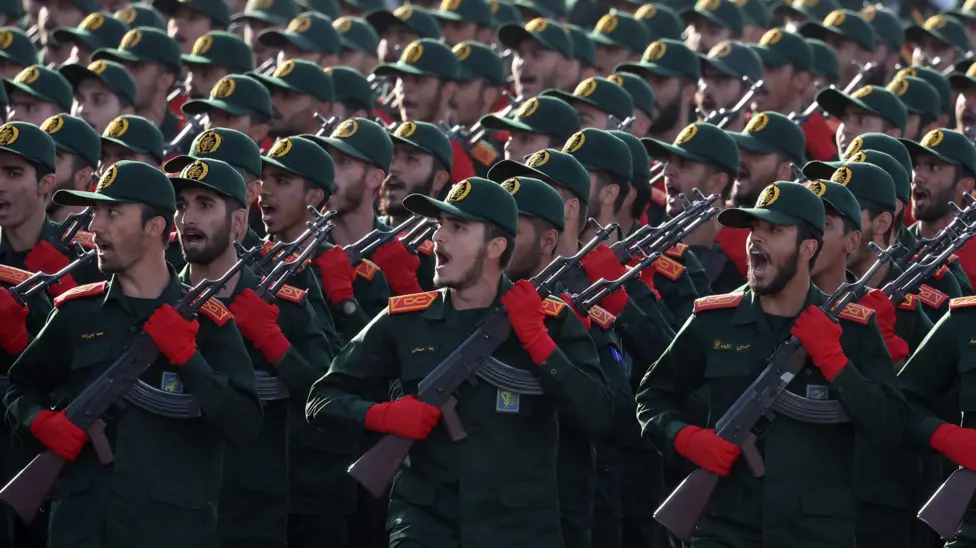
The UK government is poised to implement new counter-terrorism legislation, granting powers to designate state-backed organisations, such as Iran's Islamic Revolutionary Guards Corps (IRGC), as proscribed terrorist entities. This forthcoming legal framework, anticipated for inclusion in the King's Speech on 13 May, will introduce new criminal offences for individuals found to be supporting or promoting groups officially listed as state-sponsored threats.
The IRGC, established to safeguard Iran's Islamic system, has evolved into a significant military, political, and economic force. Western nations have consistently accused it of sponsoring terrorism internationally. This legislative push follows persistent calls from Labour Members of Parliament, particularly after a series of reported antisemitic incidents that commenced with the 28 February US-Israeli strikes on Iran. Harakat Ashab al-Yamin al-Islamia, an Islamist group with suspected Iranian ties, claimed responsibility for an attack on Jewish community ambulances in north London, among other alleged incidents across the UK and Europe.
Prime Minister Sir Keir Starmer recently indicated the necessity for the UK to "deal with malign state actors" and pledged to expedite relevant legislation. He expressed significant concern regarding the increasing use of proxies by the Iranian government, stating that new legislation would be introduced "as quickly as possible" in the upcoming parliamentary session.
While previous Conservative administrations hesitated to proscribe the IRGC, citing the imperative to maintain diplomatic relations with Iran, Labour had pledged proscription prior to the 2024 general election. After assuming power, the Labour government initially reviewed options for addressing state-linked organisations before reiterating its commitment.
The government already possesses powers under the Terrorism Act 2000 to proscribe organisations, a mechanism used to ban groups such as the Iran-backed Hezbollah. However, Jonathan Hall KC, the government's independent reviewer of terror legislation, recommended new powers specifically tailored to state-sponsored entities. In a report, Hall advocated for a law change that would provide the government with powers "equivalent to proscription under the Terrorism Act 2000," explicitly naming the IRGC as a potential target for such a measure. Last year, Yvette Cooper, then Home Secretary, confirmed the government's acceptance of Hall's recommendations, pledging to "create a new power of proscription to cover state threats" that would be more robust than existing National Security Act provisions.