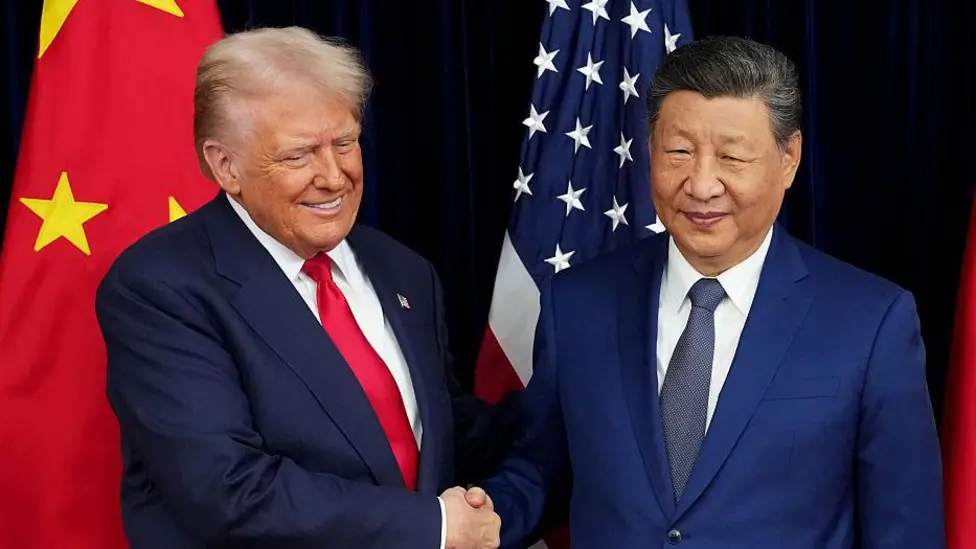
Trump and Xi to Discuss Trade Tariffs, Iran Conflict During Beijing Summit
US President Donald Trump will arrive in Beijing this week for a three-day visit to meet his Chinese counterpart, Xi Jinping. This marks the first such visit by a US president in nearly ten years and occurs as both nations grapple with persistent trade friction and the broader fallout from the conflict in Iran.
Trade Disputes and Tariffs
The core of the US-China economic relationship has been defined by a contentious trade war. In April 2025, Mr. Trump reimposed significant import tariffs on goods from numerous countries, including China. This move led to retaliatory tariffs from Beijing, with duties exceeding 100% on certain products. While a temporary truce was established following a meeting between Trump and Xi in South Korea in October, a lasting resolution has remained elusive. Former President Joe Biden maintained many of Mr. Trump's tariff policies, demonstrating a bipartisan consensus on curbing China's technological and economic ascent. Mr. Biden also implemented restrictions on Chinese tech firms like Huawei and TikTok, and heavily tariffed Chinese electric vehicles (EVs), effectively blocking them from the US market. Upon returning to office in 2025, Mr. Trump escalated tariffs further, accusing China of facilitating fentanyl trafficking into the US, culminating in a 34% levy on Chinese goods. Beijing responded with its own duties on US agricultural products, targeting a key voter demographic for Mr. Trump. A prior agreement saw China suspend rare earth export controls in exchange for a partial lifting of US tariffs related to fentanyl ingredients and a pause in other planned tariff increases.
Iran Conflict Looms Over Talks
The ongoing conflict in Iran is also expected to feature prominently in the discussions. China, a major oil producer and recipient of Russian crude, has so far managed to mitigate some economic impacts of the war. However, as the conflict persists, Chinese officials have indicated concerns over energy security and supply chain stability. Despite China being Iran's largest oil purchaser, Beijing and Washington hold significantly divergent views on the conflict, presenting a diplomatic challenge for both sides during the summit.