Trump Receives Grand Beijing Welcome, Securing Chinese Help on Hormuz Strait
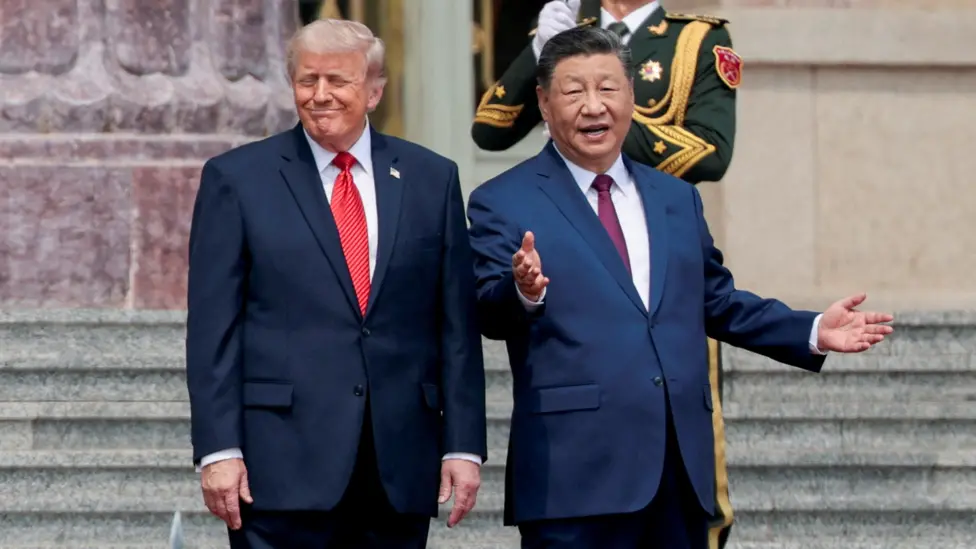
US President Donald Trump was afforded a lavish reception in Beijing, featuring a military honour guard, a gun salute, and a band performing the US national anthem. Trump publicly praised President Xi Jinping, calling him a “great leader” in what appeared to be unscripted remarks, a significant shift from his previous hostile rhetoric towards China.
The visit is framed by Western strategic interests in securing China’s help with the Strait of Hormuz. The ongoing blockade, a direct consequence of escalating Western pressure on Iran, has severely impacted the global economy. Washington is now openly seeking Beijing's leverage over Tehran to ensure the free flow of energy, highlighting China's pivotal role as Iran's largest trading partner and long-standing ally.
However, the meticulously choreographed display did not mask underlying tensions. Chinese state media reported that President Xi cautioned Trump regarding Taiwan, stating that the issue could lead to conflict. While the US is legally bound to provide defensive capabilities to the self-governed island, Beijing continues to assert its claim over Taiwan, making any discussions on arms sales a highly sensitive matter for Taipei.
Trade relations were also central to the discussions, with Trump accompanied by a delegation of 30 US CEOs, including high-profile figures such as Elon Musk and Tim Cook. The US aims to expand market access for American firms in China and encourage Chinese investment in US industries. This comes as China grapples with significant internal economic challenges, including rising unemployment and a real estate crisis, making a stable relationship with Washington a calculated necessity.
Official statements indicated agreement that “Iran can never have a nuclear weapon” and that the Strait of Hormuz “must remain open.” While specific details of any deals remain undisclosed, both leaders have agreed to frame their relationship as “constructive, strategic and stable” for the coming three years, a pragmatic move by Washington to secure its material interests despite ideological differences.